Implementing Agile in Non-Software Projects

The Agile Mindset

At its core, Agile is more than a set of practices; it’s a mindset that emphasizes customer satisfaction, collaboration, and responding to change. This mindset can be applied successfully to non-software projects, such as marketing campaigns, construction projects, event planning, and product development.

Key Principles of Agile in Non-Software Projects
Agile principles, initially crafted for software development, have proven to be highly adaptable and beneficial across various industries beyond the realm of coding and programming.

These principles can be successfully applied to non-software development projects, enabling teams to embrace flexibility, collaboration, and iterative progress.

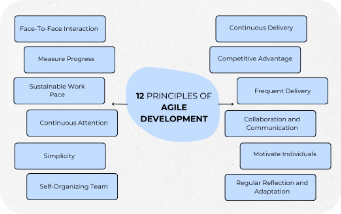
Here are 12 key principles of Agile adapted for non-software development contexts:

1. Customer Satisfaction through Continuous Delivery: Prioritize delivering valuable outcomes to your customers consistently, seeking their feedback throughout the project’s lifecycle to ensure alignment with their evolving needs.

2. Welcome Change for Competitive Advantage: Embrace change as a natural and beneficial aspect of project development, staying open to adjusting plans and strategies to maintain a competitive edge in a dynamic environment.

3. Frequent Delivery of Incremental Value: Break down projects into smaller, manageable increments, delivering tangible value regularly. This iterative approach ensures that stakeholders receive continuous benefits rather than waiting for the entire project to be completed.

4. Collaboration and Communication: Foster a collaborative culture within your team and with stakeholders. Open and transparent communication is key to building a shared understanding of goals and maintaining alignment throughout the project.

5. Motivated and Trusted Individuals: Empower and trust your team members to make decisions. Provide them with the autonomy to excel in their roles, fostering a sense of ownership and accountability.

6. Face-to-Face Interaction: Prioritize direct, face-to-face communication whenever possible. This promotes a deeper understanding among team members and reduces the risk of miscommunication.

7. Working Solutions as a Measure of Progress: Evaluate progress based on tangible results rather than extensive documentation. Working prototypes, models, or drafts serve as more meaningful indicators of advancement.

8. Sustainable Work Pace: Maintain a sustainable pace to avoid burnout and ensure the long-term effectiveness of the team. Strive for a balance between productivity and the well-being of team members.

9. Continuous Attention to Technical Excellence: Prioritize high-quality work by emphasizing technical excellence. This commitment ensures the durability and adaptability of the project deliverables.

10. Simplicity: Strive for simplicity in design, processes, and communication. Eliminate unnecessary complexities to enhance clarity and efficiency.

11. Self-organizing Teams: Encourage teams to self-organize, allowing them to decide how best to accomplish their tasks. This empowerment fosters creativity and a sense of responsibility among team members.

12. Regular Reflection and Adaptation: Incorporate regular retrospectives into your project lifecycle. Encourage the team to reflect on what’s working well, what could be improved, and adapt their processes accordingly for continuous enhancement.

By incorporating these Agile principles into non-software development projects, teams can cultivate a culture of adaptability, collaboration, and continuous improvement, resulting in more successful and resilient outcomes.

By embracing flexibility, prioritizing customer satisfaction, and fostering a culture of collaboration, teams can navigate the complexities of various projects with greater agility.

The emphasis on continuous delivery, iterative progress, and regular reflection ensures that projects not only meet evolving stakeholder needs but also maintain a focus on sustainable excellence.

Implementing Agile in Non-Software Projects

1. Define Clear Objectives

Start by setting clear project objectives and identifying key stakeholders. Understand their needs, expectations, and priorities to align the project’s direction with customer requirements.

2. Create a Backlog

Develop a project backlog or task list that includes all the work to be done. Prioritize tasks based on importance and urgency, allowing teams to focus on high-priority items first.

3. Sprint Planning

Divide the project into manageable time-bound phases or sprints. These sprints should have well-defined goals and outcomes that can be achieved within a set timeframe.

4. Daily Stand-ups

Hold daily stand-up meetings to facilitate communication among team members. These brief meetings help identify and address obstacles quickly, ensuring that the project stays on track.

5. Iterative Review and Adaptation

Regularly review progress and gather feedback from stakeholders. Use this feedback to adapt and refine the project as needed. The iterative nature of Agile allows for continuous improvement.

Benefits of Agile in Non-Software Projects
In the fast-paced and ever-evolving landscape of project management, the Agile methodology has emerged as a beacon of adaptability and efficiency.

Originally developed for software development, Agile principles have found application across various industries, revolutionizing the way teams approach projects.

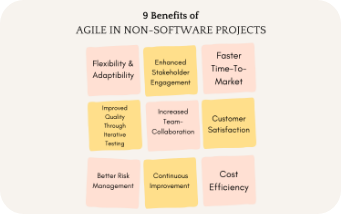
We’ll delve into the nine key benefits of Agile methodology that make it a game-changer for organizations striving for success in today’s dynamic business environment.

1. Flexibility and Adaptability

Agile methodology thrives on change. Its iterative approach allows teams to adapt to evolving requirements, market shifts, and stakeholder feedback. This flexibility ensures that projects stay aligned with the rapidly changing landscape.

2. Enhanced Stakeholder Engagement

Agile places a strong emphasis on collaboration and continuous communication with stakeholders. Regular feedback loops enable real-time adjustments, ensuring that the end product meets the expectations of both internal and external stakeholders.

3. Faster Time-to-Market

Agile’s iterative cycles, known as sprints, lead to incremental and frequent deliveries of valuable features. This not only allows for continuous improvement but also accelerates the time-to-market, giving organizations a competitive edge.

4. Improved Quality through Iterative Testing

Agile integrates testing into the development process from the outset. With each iteration, testing is performed, and feedback is incorporated, resulting in higher product quality and fewer defects by the end of the project.

5. Increased Team Collaboration

Agile methodologies promote cross-functional teams that collaborate closely throughout the project. This collaborative environment enhances communication, breaks down silos, and fosters a shared sense of ownership, leading to higher team morale and productivity.

6. Customer Satisfaction

The iterative and customer-centric nature of Agile ensures that the end product aligns with customer expectations. Regular feedback loops allow for adjustments, reducing the risk of delivering a product that doesn’t meet customer needs.

7. Better Risk Management

Agile’s incremental approach enables teams to identify and mitigate risks early in the project. By addressing potential issues during each iteration, teams can adapt their strategies, minimizing the impact of unforeseen challenges.

8. Continuous Improvement Culture

Agile is not just a methodology; it’s a mindset. The regular retrospectives and feedback loops encourage a culture of continuous improvement. Teams reflect on their processes, identify areas for enhancement, and adapt accordingly.

9. Cost-Efficiency

Agile’s focus on adaptability and early risk identification contributes to cost-efficiency. By catching issues early in the development process, organizations can avoid costly rework and deliver a product that aligns more closely with stakeholder expectations.

As organizations navigate the complexities of the modern business landscape, the benefits of Agile methodology shine through as a beacon of success.

From enhanced flexibility and stakeholder engagement to faster time-to-market and improved team collaboration, Agile principles offer a holistic approach to project management that fosters adaptability, efficiency, and customer satisfaction.

Embracing the Agile mindset is not just a methodology shift; it’s a strategic move toward resilience, innovation, and sustained success in an ever-changing world.
Project Management Methodologies

Project Management Methodologies

Getting your team organized around a project is often easier said than done. Fortunately, following a project management methodology can help you organize your project into a structured, streamlined process. It makes team collaboration more efficient and projects become better organized.

Project management experts agree that most projects benefit when a recognized methodology is followed. While there are dozens of project management methods available, the majority of projects can be managed efficiently by following some popular project management methodologies below.

Agile Methodology

Project Management Methodologies

Agile project management is an approach based on delivering requirements iteratively and incrementally throughout the project life cycle. At the core of agile is the requirement to exhibit central values and behaviors of trust, flexibility, empowerment and collaboration.

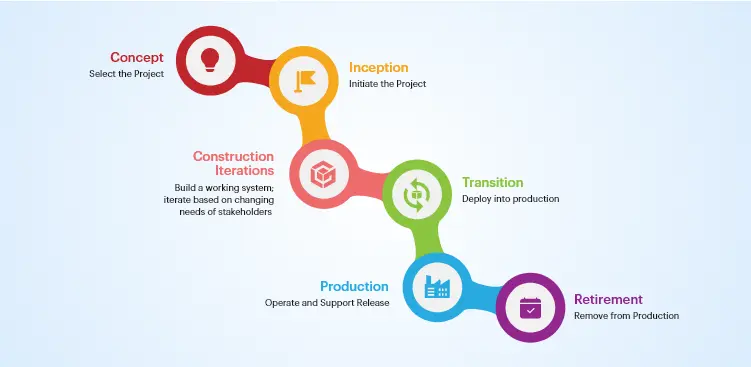
Agile process flow

Concept – Projects are envisioned and prioritized

Inception – Team members are identified, funding is put in place, and initial environments and requirements are discussed

Iteration/Construction – The development team works to deliver working software based on iteration requirements and feedback

Release – 2QA (Quality Assurance) testing, internal and external training, documentation development, and final release of the iteration into production

Production – Ongoing support of the software

Retirement – End-of-life activities, including customer notification and migration

This view presents the full Agile lifecycle model within the enterprise. In any enterprise there may be projects operating simultaneously, multiple sprints/iterations being logged on different product lines, and a variety of customers, both external and internal, with a range of business needs.

Project Management Methodologies

Benefit of Agile methodology

Agile approaches empower those involved; build accountability; encourage diversity of ideas; allowing the early release of benefits; and promotion of continuous improvement.

It helps build client and user engagement because changes are incremental and evolutionary rather than revolutionary: it can therefore be effective in supporting cultural change that is critical to the success of most transformation projects.

It allows decision ‘gremlins’ to be tested and rejected early: the tight feedback loops provide benefits in agile that are not as evident in waterfall.

Project Management Methodologies

Disadvantages of Agile methodology

Agile project management has its disadvantages such as less easy identification of project risks and poor management of resources.

A flexible system like Agile can make it difficult to focus and push your projects to completion if you’re not careful. There’s less set in stone, and no process to make sure the project is continuing smoothly, making it easy for projects to lose direction.

Scrum Methodology

Scrum project management is a methodology for managing software delivery that comes under the broader umbrella of agile project management. It provides a lightweight process framework that embraces iterative and incremental practices,

helping organizations deliver working software more frequently. Projects progress via a series of iterations called sprints; at the end of each sprint the team produces a potentially deliverable product increment.

Project Management Methodologies

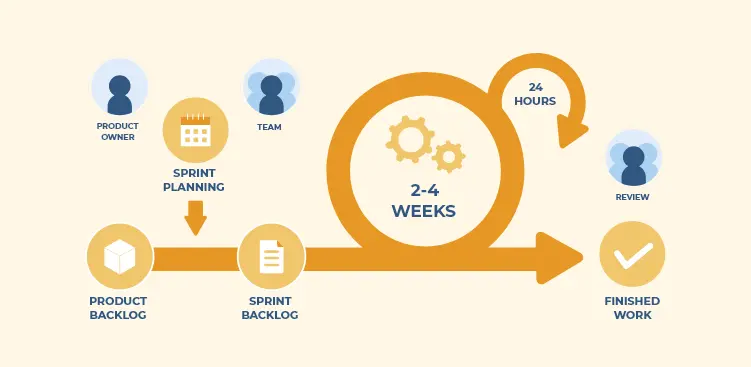
Scrum process flow

Backlog Refinement Meeting (also called “Backlog Grooming”):

This meeting is much like the planning phase of TPM, and is held on day one of each sprint—you’ll look over the tasks left in the project, things left behind from previous sprints, and will decide what to focus on. The PO makes the call on how to prioritize tasks, and this ultimately determines how efficient the sprints are.

Sprint Planning Meeting:

Once the PO decides what to focus on, this meeting helps the team understand what they’ll be building and why. You could share “user stories,” describing features from the customer’s point of view, or could simply divide tasks for each team to work on during the sprint.

Daily Scrum Meetings:

Simple daily meetings that should only last about 15 minutes, Scrum meetings are a way for team members to update each other on progress. This meeting is not the time or place to air issues—those will go to the Scrum master outside of the daily meetings—but instead is a place to keep the ball rolling.

Sprint Review:

Since a potentially shippable item is expected at the end of each sprint, the Scrum framework naturally places an emphasis on review. Team members will present what they’ve completed to all stakeholders. While this meeting pushes accountability, its goal is to make sure that the sprint’s completed items match up with business and user goals.

Sprint Retrospective:

Held immediately after the sprint review meeting, the Sprint retrospective is full of collaborative feedback. Looking at successes and holdups, everyone decides what is working (what they should continue doing) and what isn’t working (what they should stop doing). This should inspire the focus of the next sprint.

Benefits of Scrum methodology

Scrum can help teams complete project deliverables quickly and efficiently:

  • Scrum ensures effective use of time and money
  • Large projects are divided into easily manageable sprints
  • Developments are coded and tested during the sprint review
  • Works well for fast-moving development projects
  • The team gets clear visibility through scrum meetings
  • Scrum, being agile, adopts feedback from customers and stakeholders
  • Short sprints enable changes based on feedback a lot more easily
  • The individual effort of each team member is visible during daily scrum meeting.

Disadvantages of Scrum methodology

  • Scrum often leads to scope creep, due to the lack of a definite end date
  • The chances of project failure are high if individuals aren’t very committed or cooperative
  • Adopting the Scrum framework in large teams is challenging
  • The framework can be successful only with experienced team members
  • Daily meetings sometimes frustrate team members
  • If any team member leaves in the middle of a project, it can have a huge negative impact on the project
  • Quality is hard to implement, until the team goes through aggressive testing process.

Waterfall methodology

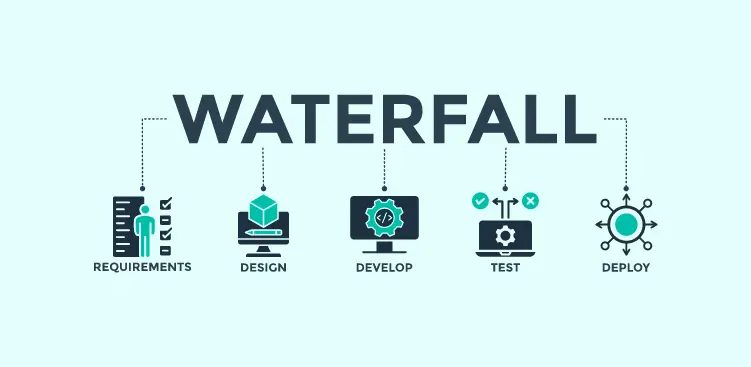
Waterfall project management is a sequential, linear process of project management. It consists of several discrete phases. No phase begins until the prior phase is complete, and each phase’s completion is terminal—waterfall management does not allow you to return to a previous phase. The only way to revisit a phase is to start over at phase one.

Project Management Methodologies

Waterfall process flow

  • Requirements– where we analyze business needs and document what software needs to do
  • Design– where we choose the technology, create diagrams, and plan software architecture
  • Coding– where we figure out how to solve problems and write code
  • Testing– where we make sure the code does what it supposed to do without breaking anything.
  • Operations – where we deploy the code to production environment and provide support

Advantages of the waterfall methodology

1. Extensive documentation

Because you can’t go back to a previous activity, you’re forced to create a comprehensive documentation from the start, listing all the requirements you can think of.

2. Knowledge stays in the organization

When you have extensive documentation, knowledge won’t get lost if someone leaves. Also, you don’t have to spend time on training new members as they can familiarize with the project by reading the documentation.

3. Team members can better plan their time

Because everyone knows in advance on what they’ll work, they can be assigned on multiple projects at the same time.

4. Easy to understand

Waterfall projects are divided in discrete and easily understandable phases. As a result, project management is straightforward and the process is easily understandable even to non-developers.

5. Client knows what to expect

Clients can know in advance the cost and timeline of the project so they can plan their business activities and manage cash flow according to the plan.

6. Client input not required

After requirements phase, client input is minimal (save for occasional reviews, approvals, and status meetings). This means you don’t have coordinate with them and wait for when they’re available.

7. Easier to measure

Because waterfall projects are simple, it’s much easier to measure your progress by quickly looking at a Gantt chart.

8. Better design

Products have a higher cohesion because during the design phase you know everything that must be taken into account. There is no one-feature-at-a-time problem that leads to usability problems down the road.

Disadvantages of the waterfall methodology

1. No going back

Once you’re finished with one activity, consequently, it becomes difficult and expensive to go back and make changes. As a result, this puts huge pressure on the planning.

2. No room for error during requirements phase

Everything relies heavily on the requirements phase an,d if you make an error, the project is doomed.

3. Deadline creep

Once one activity is late, all the other activities are late too, including the project deadline.

4. QA too late to be useful

Testing is done at the end of the project, which means that developers can’t improve how they write code based on QA feedback.

5. Bug-ridden software

Because the testing is done at the end, most teams tend to rush the testing in order to deliver the project on time and hit their incentives. These short-term wins lead to sub-par quality and long-term problems.

6. Not what the client actually needs

Most of the time, clients can’t articulate what they need until they see what they don’t need. If the client realizes they need more than they initially thought, the project plan will need a major overhaul (as well as the budget).

7. Unexpected problems

Designers can’t foresee all the problems that will arise from their design, and once those problems surface, it’s very difficult to fix them.