Planning in Project Management

Project Planning

As we progress with Project Planning, we must now shift our focus to two very significant aspects of project management – Quality and Risks.

Quality Management Plan
Project Planning

What is Quality?

As per the 6th Edition of the PMBOK; Quality is “the degree to which a set of inherent characteristics fulfills requirements, decrease rework & costs, increase productivity as well as stakeholder satisfaction.”

International Organization for Standardization (ISO) defines quality as – “the totality of characteristics of an entity that bear on its ability to satisfy stated or implied needs.”

Project Planning

If you take a closer look at both the definitions it is evident that conformance to requirements, fit for use and deliver the intended value to the customer, sponsor and or stakeholders involved is the true indicator of quality.

And hence, it is safe to state that the fundamental need is to deliver a product or a service that is in accordance with the requirements & specifications as defined at the beginning of the project and directly meets/exceeds the customer expectations.

This also makes it clear for us that Quality is not a one-time activity. It is a fundamental principle that must be attended to right from project initiation through closure.

And yes, Quality is everyone’s responsibility right from the top to the bottom of the project chain – Sponsors, stakeholders, Project Managers, Project Teams and the organization as a whole.

Similarly let us take a look at Quality Management.

What is Quality Management?

Quality Management is a continuous repetitive process of evaluating quality and updating processes till each deliverable meets the required quality standards or metrics as defined by the customer or project sponsor.
Project Planning

As stated earlier, delivering a project with quality also needs better coordination among the project manager, project team and the business sponsor. There must be well-defined and agreed quality metrics, processes and governance in place that explain how quality will be delivered, measured, maintained and accepted by the customer.

Project Quality Management has 3 main processes 

  • Quality Planning
  • Quality Assurance
  • Quality Control

Quality Planning

Quality Planning is much more than striking the balance among scope, time and cost. We undertake a project to deliver improvements—either enhancing an existing product, service, or process, or creating something new that provides the organization with the missing links.

To ensure we deliver improvement, the team must define key quality metrics and checklists and establish a baseline for quality. It is imperative that everyone on the project have the same understanding of what quality means for this particular project

As part of the Quality Planning you deploy various Tools and Techniques like

  • Cost-Benefit Analysis
  • Cost of Quality
  • Design of Experiments
  • Benchmarking
  • Interviews
  • Brainstorming

It is very important for a Project Managers to understand which tools suit them the best to establish the credibility of their delivery and quality. This also begets the fact that sponsor buy-in is very important and hence there must be an established link between the tools and the metrics you define as part of your Quality Planning.

Quality Assurance

This aspect of quality management is all about evidences of the quality measures in play. For a typical IT or Software development project it would be your test plan and test cases and the carious testing measures that would be deployed.

Quality assurance is all about continuous process improvement. This includes the investigation or root-cause analysis of issues within processes as well as continual assessment of which steps in a process are adding value.

The project team implements Quality Assurance at the very beginning of the implementation phase to identify errors and defects as early as possible.

One of the most popular tools the team uses is the Deming Cycle, named after quality guru Edward Deming, also known as PDCA – Plan, Do, Check, Act.
Project Planning

Similarly, the project team conducts Quality Audits to review and improve quality management activities. Consultants or external groups usually perform these audits.

The team then resolves any detected issues or problems through corrective actions approved by the relevant change control processes.

Also do note that quality assurance also covers all associated processes involved in managing the project along with the product or service planned for delivery.

Summarily, Quality Assurance assures the sponsors that safeguards are in place to make sure that the expected levels of quality will be reached to produce quality outputs.

Quality Control

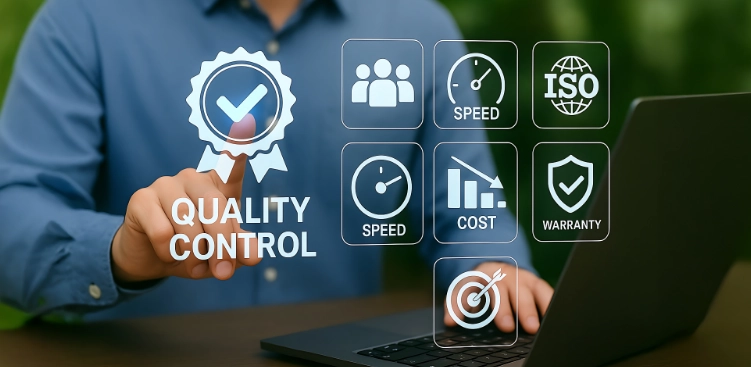
Quality control is all about planned deliverables versus actual. It is a direct comparison of the output with the requirements or agreed goals.
Project Planning

With the right quality control measures in place you identify the problems and improve your output. And this is applicable to your scope, cost and schedule.

Similar to Quality Planning, Quality Control also uses some common tools and techniques for its effectiveness such as

  • Cause and Effect – the famous Fishbone or Ishikawa diagram
  • Control Charts
  • Pareto Charts
  • Histograms etc.

The central theme here is data analysis. Continuous monitoring of the identified quality metrics and their performance to identify outliers. And more so to get the right picture to make well informed decisions at the right time and avoiding knee-jerk reactions from the sponsors and stakeholders.

Continuous process monitoring and improvements aids in developing the right processes that aid in delivery of quality products and services.

Risk Management Plan

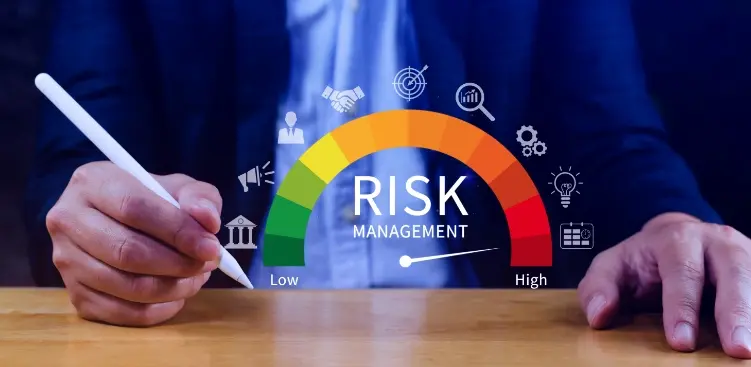
A risk is defined as an uncertain event or condition, that if occurs has a positive or a negative impact on the project. And what makes it furthermore tricky is that fact that risks can be man-made, natural or statutory in nature.
Project Planning

Risk management involves planning, identifying, analyzing, responding to, and controlling risks on a project. The risk plan lists all potential risks, their ranking or priority, preventive actions, and a process for tracking them.

Risk management follows specific core principles. When performing a risk assessment, the areas outlined by ISO should be included.

The process should create value

  • It should be an integral part of the organizational process
  • It should factor into the overall decision-making process
  • It must explicitly address uncertainty
  • It should be systematic and structured
  • It should be based on the best available information
  • It should be tailored to the project
  • It must take into account human factors
  • It should be transparent and all-inclusive
  • It should be dynamic and adaptable to change
  • It should be continuously monitored and improved upon as the project moves forward

When first addressing a risk management procedure for a project, take note of the aforementioned principles to ensure that your specific assessment is matching up with the core ideals as defined by ISO.

Risk Management Steps

Risk Identification
Project Planning

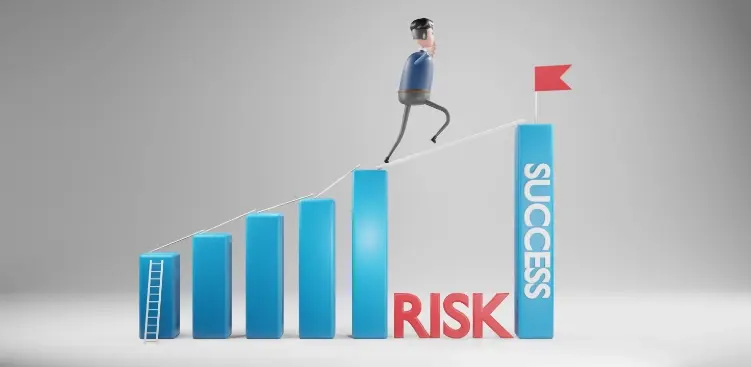
We must identify risks as early as possible. Once we identify them, the team records all risks in a Risk Register and shares it with relevant stakeholders. The team also reviews risks during regular checkpoint and status meetings to prevent any unwanted surprises.

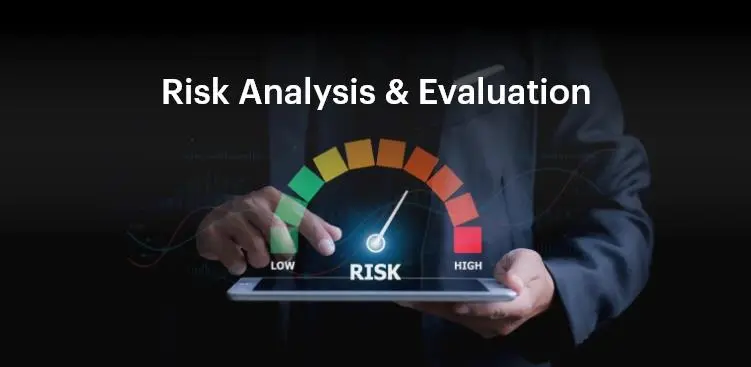
Risk Analysis & Evaluation Here you do a quantitative and qualitative analysis of your identified risks. Most importantly, the probability, severity and impact of the risks are evaluated and prioritized.
Project Planning

Also, the analysis helps you with defining your contingency and management funds to cater to costs as a result of the occurrence of the risks.

Risk Handling Risk Handling is all about mitigating risks. You plan for the corrective actions to be taken to deal with the risk occurrence. As stated earlier a risk may have a Positive or a Negative impact on your project and hence you need to prepare your Risk Responses accordingly.
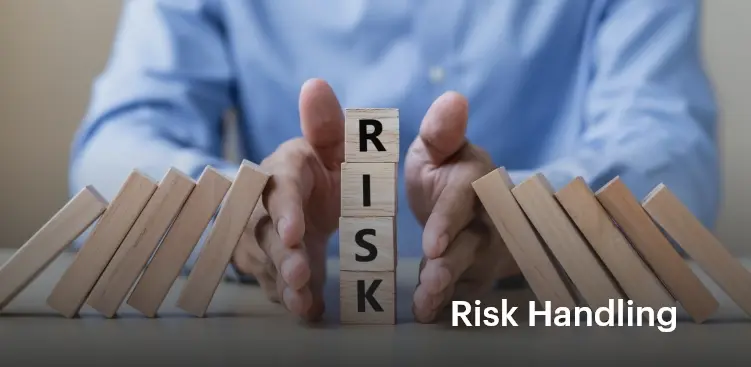
For any anticipated negative impact you plan to

  • Mitigate: Entire focus is to reduce or prevent entirely the chance of risk occurrence &its impact.
  • Avoid: Complete elimination of the threat. For example, changing the project management plan.
  • Transfer: Transfer the risk to a third party; e.g. insurance.
  • Accept: Acknowledge the risk and document it, but do not take any action to mitigate it or its effect.

Risk Control Risk monitoring and controlling or risk review is an iterative process that uses progress status reports and deliverable status to monitor and control risks. Various status reports, such as quality reports, progress reports, and follow-up reports, enable this process.
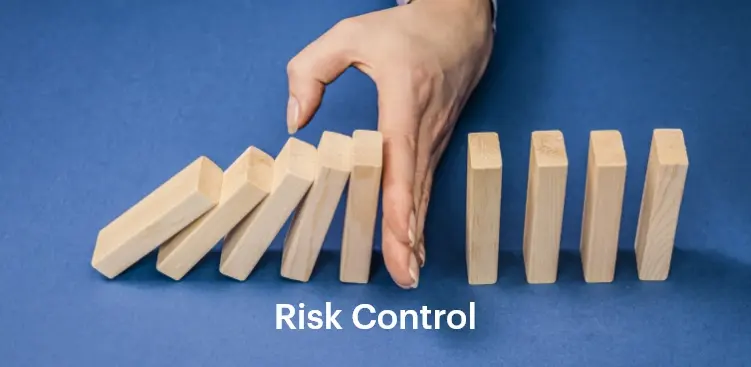
Risk Reviews are an integral part of your overall project monitoring. The Risk Register I duly updated all throughout to document any changes, actions, remediation done for the identified risks.
Matured organizations hold separately planned risk review meetings at a frequency determined by the overall risk level of a project.

Benefits of Risk Management PlanPrevention is always better than cure!Active risk management efforts helps you to

  • Successfully deliver project outcomes with minimal obstacles
  • Prevents exhaustion of project quality, schedule, resources and costs
  • Avoid risks and threats entirely
  • Gain valuable experience to deal with future crisis
  • Better handle on risk management overall as an organization
  • And helps build organization’s reputation
  • Improves overall project efficiency

Following each Project Planning process with the right intent builds discipline, shows customer care, and ensures commitment to project deliverables.
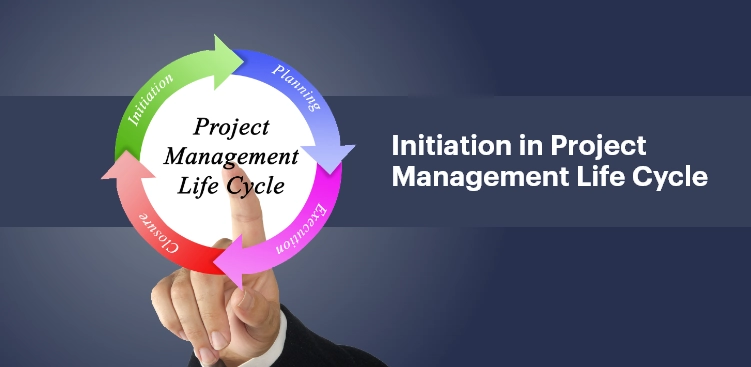
Initiation in Project Management Life Cycle

project initiation phase

The Project Management Lifecycle is kick-started with the crucial Project Initiation Phase. The entire basis of why you should be developing/delivering a product, service, or event is formed with the Project Initiation.

It is important to note that a Project Manager is duly appointed to the project, which also signifies executive intent. In a way, he is the first resource assigned to the project.

The project manager needs to establish the business case for the project; ensure that the proposed outcome is aligned with the organization’s strategic goals; prepare an initial budget and timeline; and also involve relevant stakeholders, sponsors, and identify team members who will work on the project once the business case is approved.

Key Project Initiation Activities

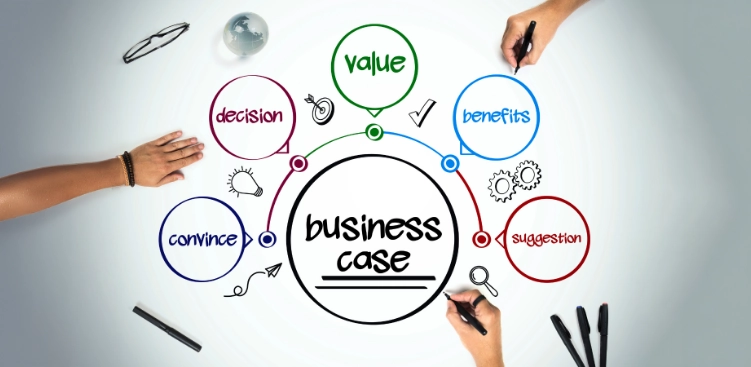
  • Develop a Business Case
  • Undertake a feasibility study
  • Establish the Project charter
  • Appoint the project team
  • Perform phase review

Developing Business Case

project initiation phase

A business case is used when expenditure on a project is required. Once a business case is prepared, it is shared with a sponsor or investor for approval. After approvals are obtained, the required resources and funding are also received.

What does a business case include?

project initiation phase

1. Benefits: The value to be delivered by the undertaking is clearly defined and shared with the customer, sponsor, stakeholder, and team members. The key objectives, strategic gains (operational and or economic), and associated profits are well illustrated during initiation for absolute clarity and expectation management.

2. Options: Options include the alternative and other courses of action that are considered as the project plan is designed and developed.

3. Time and Cost: It includes the determination of the project cost and time required to complete the project.

4. Cost-benefit analysis: Cost-benefit analysis describes how the cost of a project is balanced with the return. For example, due to a specific reason, your project needs some additional resources and some new systems. This is where the cost-benefit analysis is done. It helps justify the additional investment and show the value and or return generated from this investment.

Project Feasibility Study

The purpose of a Feasibility Study is to identify the problem and its solution in a project and to check if the planned solution meets the stated business requirements. In other words, if you are not sure whether your solution will deliver the targeted outcome, then a Project Feasibility Study will help gain that clarity on those solutions

project initiation phase

During the Feasibility Study, a variety of assessment methods are followed. The outcome of the Feasibility Study is a confirmed solution for implementation.

What are the factors that should be considered for testing feasibility?

Technical Feasibility

Technically skilled resources are available –  Having the right mix of resources assigned to the project is important. A true requirement of skill mapping is to ensure the right resources with the right skills are available to meet the project responsibilities.

Required technologies are available – We must review and define the relevant hardware, software, equipment, licenses, regulatory approvals, if applicable, etc. are available to deliver the project.

Economic Feasibility

While determining economic feasibility, we need to consider the following factors

  • Sponsors should have an ample amount of capital to invest – Even if we have sufficient amount of resources and required technology, we must have the required investments to maintain the resources. It is crucial that we have the sponsor’s buy-in for the execution of the project. Unavailability of the required funds will lead to project delay and or failure.
  • Will the investment generate the Targeted ROI? – Projects are meant to generate capital benefits or business value to your organization. So it is important to analyze whether the investment in the project will provide business benefits to your organization.
  • Contingency Funds – Our project budget must also have a certain contingency fund allocated. And we need to see how big that bucket is and if that is enough to bail us through any significant issues or risks.

Legal Feasibility

The undertaking must meet and comply with all applicable regulatory and statutory rules and laws

  • Data protection or social media laws  -It must be ascertained that no data privacy laws are breached, for e.g., while dealing with data-sensitive projects. Any associated non-disclosure agreements, etc., must be thoroughly reviewed and put in place as applicable to the undertaking.
  • Zonal laws – If we are planning to construct a mall in a place, we need to check whether the zone has the required permissions to build malls. A feasibility study might reveal the organization’s ideal location isn’t zoned for that type of business.

Operational Feasibility

This assessment involves undertaking a study to analyze and determine whether—and how well—the organization benefits by completing the project. Operational feasibility studies also analyze how a project plan can satisfy the requirements identified in the analysis phase.

Scheduling Feasibility

This assessment is the most important for project success. After all, a project may fail if it is not completed on time. In scheduling feasibility, we estimates how much time the project will take to complete and also we need check whether do we have estimated time to invest in the project.

Establish Project charter

Project Charter contains the objectives of a project. This statement also sets out detailed of project goals, roles and responsibilities, identifies the main stakeholders, and the level of authority of a project manager.

It also acts as a guideline for future projects and is an important material in the organization’s knowledge management system.

project initiation phase

How to write project charter?

  • Vision: You need have a clear idea on the scope of the project. Describe each of the deliverables the project is tasked to produce. Once you’ve gotten all of them down, you’ve got a foothold on your charter and are ready to move on.
  • Organize: When you’re building a structure for your charter there are four subsets you’re going to need to identify. They are Customer/end users, stake holders, roles. Now you need to define the lines of reporting between these various roles in the project. Use a project organization chart to do this.
  • Implementation: Once vision and organization structure is defined, now we need develop a plan to implement them. While implementing, a plan we need keep 3 factors in the mind-they are Milestone dependencies and resource. We are going to learn more about this in the Initiation module.
  • Risks, Issues & Budget: No charter is complete without covering the potential risks and issues that can derail a project. This includes assumptions and constraints related to the project. Risks can be natural, man-made, governmental and regulatory.

A risk is a potential issue that may or may not happen in a project. Risk is not always negative, as there is such a thing as positive risk, and you should prepare for that as well.

An issue is something that has already occurred in the project. Basically, a risk is a “perceived” issue and an issue is “an event with a negative impact” that has already occurred.

Appoint the project team

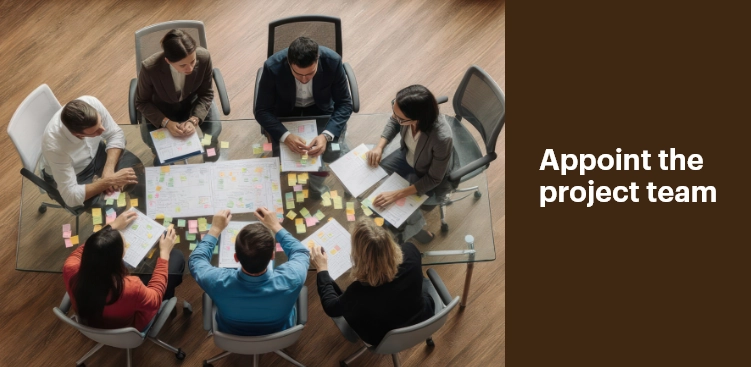
According to Wikipedia, a project team is a group of members from different functions and are assigned to activities for the same project. A team can be divided into sub-teams according to need.

Usually project teams are only used for a defined period of time. They are disbanded after the project is deemed complete. Due to the nature of the specific formation and disbandment, project teams are usually in organizations.

Project teams need to have the right combination of skills, abilities, and personality types to achieve collaborative success.

How to build a project team

Project Type

We need to understand the nature, required skills and resources for successful completion of the project. We need to ascertain if the project is manual labor intensive, or one that needs high IQ and skills. And we also need to be aware if such a project has ever been undertaken by the organization and how mature

High Speed Delivery

We need to understand the nature, required skills and resources for successful completion of the project. We need to ascertain if the project is manual labor-intensive or one that needs high IQ and skills. And we also need to be aware if such a project has ever been undertaken by the organization and how mature

Project SMEs

Always strive to strike balance with the resource mix. You may not always have all the top talents available for your projects. Even if they do, it will highly skew your resource cost thereby stretching your budget. Being a smart Project Manager, you must ensure you have the right Subject Matter Experts (SMEs) available to the project when needed plus enough resources who can execute under the guidance of the SMEs and leads.

Right mix of experience and energy is what you must aim for a project team!

The Client

Know Your Customer (KYC) – There is no alternative to it. Before beginning any engagement, we must spend considerable effort and thought to understand our customer. He is the one paying for the project and will sign on the project closure. Be very clear of how your clients like to be approached, informed and what is their desired communication mode and frequency.

Plan to put your seasoned client management personnel at the forefront for exceptional customer support and satisfaction. Having personnel who have worked with a diverse clientele and can anticipate customer needs in advance would prove hugely beneficial to the project manager.

A Balance in Skill Set

Experience counts and so does passion. Age doesn’t alone determine experience. Some people may have worked across several roles making them great multi-tasker while others may have specialized in one specific area making them your subject matter expert.

Perform phase review

We need to determine review criteria to evaluate each completed project task and inform team members of expectations regarding satisfactory performance. We also need to secure additional project personnel if your review reveals the need for additional resources to work on assignments to bring the project to completion on time.

Now to get going with your project planning refer to the upcoming chapter.