Project Management and Project Delivery seemingly harmless words; but can run businesses to the ground when gone wrong. It is not as simple as moving from one point to the other or setting a goal and distributing the activities among a set of people and arriving at it happily. If you are one of those Project Managers who thinks things are this simple – you are lucky!
Projects are complex endeavors with 100s of moving parts. Pick any project from your experiences so far and analyze. You will find elements like resources, time, budget, milestones, defined deliverables, company direction, change of stakeholders, change of stakeholder requirements, market conditions, competition, acts of nature etc. that need to be assessed and planned for.
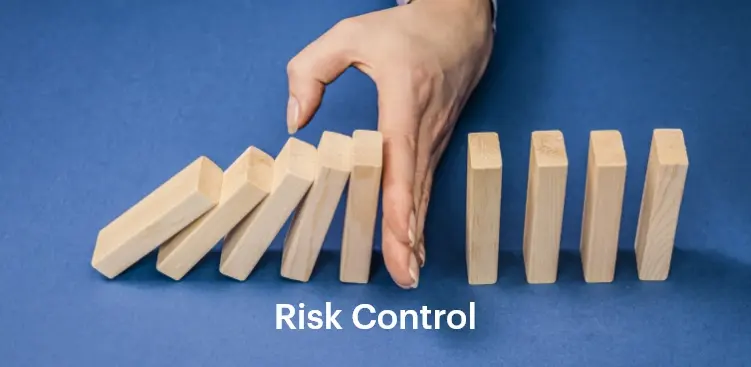
You miss to account for one of them & if it skews in an unwanted direction your entire project runs the risk of crumbling like a house of cards.
Agreed that we cannot humanely control all of these elements but definitely a few of them and mainly the critical ones –
Scope, Timelines & Budget!

The most interesting thing about these three elements is that the same people often control, change, and manipulate them.
- Existing or New Stakeholders
- Change in stakeholder requirements
- Business demands
- Company direction etc.
Let us see how any unplanned changes to these elements impact our deliverables and their quality.
The root of all troubles for any project lies in Scope changes or Scope Creep as commonly referred in a purely project management terminology.
Understanding Scope & Scope Creep

Defining and understanding Scope of a project is the most important activity in the project management life cycle. Simply, because Scope or the statement of work [SOW] is the very basis and the bible that guides your project from start to finish
The “single source of truth” that pervades and resolves all conflicts!
At the onset of a project, being a Project Manager you must spend a fair amount of time to understand:
- The requirements
- Ask more and more questions till you are sure you understand your client and stakeholders expectations.
- What are the business drivers of the project
- What is the fundamental need of the project
- Why the project is being funded and prioritized as it is
Once you have all the above answers, you must proceed with documenting them, circulating them among the stakeholders, decision makers to ensure they understand, agree and sign-off.
A point worth noting here is the documentation is to ensure everyone involved with the project knows very clearly as
- What WILL be delivered
- What WILL NOT be delivered
In addition, to this allow for a few days for your clients and executives to review and request any modifications. But at the same time do assign an “offer expires by date” to add the much needed attention & focus to this binding document.
The expiry date triggers a very helpful chain reaction where all stakeholders become keen to ensure ‘their objectives’ are part of the project scope. Thereby, there is increased participation, debate and Q&A to further refine the end objective and project goals.
Do note that the increased participation also means greater stakeholder alignment which is one of the critical success factors for successful project delivery.
Having performed the above due-diligence, ensures that everyone understands the deliverables, the time, efforts and cost required to meet the overarching project goal.
So far so good! You have done everything a good project manager MUST do.
Now, let’s get to the devil that lies in actual practice and implementation – say hello to Scope Creep!
Scope Creep, simply put is adding new features, altering existing requirements or changing the pre-agreed project goals. They can appear at any time and disrupt your project strategy because they demand additional resources, time, and cost that you didn’t account for initially.

Scope creep often starts as minor requests but can snowball into major changes, shifting the project away from its original intent.
And suddenly, delays occur, teams miss milestones, planned costs rise, quality drops, and customers become increasingly dissatisfied.
Hence, it is important to understand that no project is free of Scope Creep! They are bound to find their way in to your project. But it is also important to understand WHY?
Why do I have Scope Creep?
Though there are a lot of reasons that lead to Scope Creep, the most important one is:
Not having a well-defined Scope Baseline

As stated earlier, if you don’t devote enough effort and focus to baseline your scope, you set yourself up for definite failure. However despite of the due diligence there are other factors that contribute to a lack of proper Scope e.g.
- Lack of enough clarity or information on requirements
- Unavailability of the right stakeholders
- Conflicting ideas and opinions
- Lack of proper and time bound feedback mechanism
- Promising the moon
- Bid to outdo the competition
- PM with poor leadership
Understanding the Impact of Scope Creep on Time and Budget

We now have a fair understanding of what is scope creep & what contributes to it. So let us rightly move to explore its impact on our project, project team and reputation of our organization.
Consider a relevant hypothetical example: a new iPhone launch. At the start of the year, the team decides the next iPhone will have a larger screen and a new exterior. We all know Apple launches its products every September at WWDC without fail.
Hence all project execution and planning is done with that date in mind. Now the project kicks-off everything goes fine and suddenly there is a buzz around removing the standard headphone jack or adding a dual sim slot!
What do you think is the impact of these 2 feature changes? These “features” as we refer to bring with them a whole range of research, additional planning and overhauls the execution. Almost everything stops until the exterior frame is finalized. Do not forget the manufacturer involved in making these phones.
So the new plan goes like this – research and build ability for the iPhone to host and run the 2nd sim, remove the headphone jack and replace – replace with what??? You get the drill!
Think of this – the WWDC CANNOT be shifted; what all is at stake – Money, lots of it! Reputation – one that is hard to earn so easily and must be protected at all costs. So again – Money! Bound to meet the WWDC deadline so add resources, more and more resources.
Now, do note that we all are not Apple Inc. and consider what havoc a Scope Creep can cause to our bottom-line, company’s reputation and most importantly the confidence and moral of the project team. Demotivated soldiers have never won a war!
This is as seen on the surface. Just drill down a bit and imagine how a real workplace with such an activity in progress would look!
- Continuous firefighting
- Conflicting interests & priorities
- Overloaded and overworked resources
- Rising expenses & investments
- Dissatisfied Stakeholders
- Demotivated & battered employees
How to protect your Project from Scope Creep?
With the insights shared so far it is pretty evident of what must be done to ‘prevent’ scope creep. But what about when you are already into it?
Let us take a quick look at some best practices or guidelines followed by project teams across the globe to contain scope creeps and yet maintain a high client satisfaction and project success rate.
Invoke the Scope Baseline or SOW
The project Scope is a Project Manager’s best friend! Even the smallest activities that might deviate from the agreed plan are referred to the Scope Baseline by the most diligent PMs.
The healthy practice of consulting the baseline proves an effective strategy in holding off pushy clients. In other words, it also reminds them of what they signed up for and puts the extra onus on them to be judicious with their requests
Communication and Feedback
Too much communication has never proved harmful! Make sure your clients, decision makers and each individual who has a significant stake in the project and can alter its course are fed a steady stream of progress information.
Define a clear communication criteria in terms of frequency of updates, means of updates (reports, meetings) and timing of these updates. This keeps your clients updated with actual status and helps ease any anxiety plus helps build their confidence and trust.
Also, when they know they have the right platform & tools to voice their feedback or concerns they would be more vocal and mindful of the timing too to not derail steady progress.
Thus any conflicting or contentious issues can be proactively identified and addressed to prevent Scope Creep.
Assess & Estimate

We all know an outright rejection or denial of a client’s request isn’t advisable. And most of the times you may not be even aware of what does a scope change request entails. It might be a fairly simple ask and not impact the scope.
The best thing to do upon receiving an unexpected request is to respond with – “Let me assess and estimate the time and cost implications of the requested change”.
Use these words – assess and estimate—to quickly ward off any client personnel who aren’t serious or committed to the project.
If serious, they’ll review your assessment, decide to proceed, and give you a chance to generate revenue and implement change management.
Thus, we are all happy!
Build a strong Change Control Culture

We cannot emphasise enough the significance of a robust Change Control process. You should NEVER have a contract without a Change Process clause!
When someone requests a change, the team triggers a series of approvals, giving the requested changes the attention and focus needed to decide if they are necessary.
Well, it will curb scope creep is one aspect but the important thing is it leads to a good review of the original plan and assessment of
- What will the impact
- Are we ready to accept the impact – delays, costs, etc.
- Is there enough cost and time bandwidth
- Lastly, will it enhance or significantly support the fundamental goal of the project
Change Control culture allows you to maintain the required transparency & puts you in control! Additionally it demonstrates your forward thinking and professionalism thereby a positive impact on your company’s reputation. Win-Win! Isn’t it?
Penalties – The Silver Bullet
Clients and service providers deploy penalties as an aggressive approach to ensure both sides hold their end of the bargain.
With penalties baked into a contract ensures both parties are always diligent and never lose sight of the goal. Penalties trigger a competition, fierce at times where both strive to achieve the same goal.
And it goes without saying, all unwanted and impulsive requests are out of the door right away.
Why so?
Because the primary reason for undertaking a project is to make money not lose it!
To that effect, let us deploy the right tools as illustrated above and at our disposal to ensure that things never come this far in our projects!