Agile methodologies have transformed the way teams approach project management and product development. Central to the Agile philosophy is the idea of continuous improvement, which relies on data-driven insights to make informed decisions.
Agile Metrics and Key Performance Indicators (KPIs) provide a structured way to measure team performance, identify areas for improvement, and drive success.
The Purpose of Agile Metrics and KPIs
Agile Metrics and KPIs serve multiple purposes within an Agile team:
Continuous Improvement
Metrics provide valuable feedback on processes, allowing teams to identify areas that need improvement. This fosters a culture of continuous learning and adaptation.
Visibility
Metrics offer transparency into the progress of work, helping teams and stakeholders understand the current state of the project or product.
Informed Decision-Making
Data-driven decisions are more reliable and lead to better outcomes. Metrics enable teams to make informed choices about priorities, resource allocation, and process adjustments.
Goal Alignment
KPIs help align team efforts with organizational goals. By tracking performance against predefined metrics, teams ensure they are moving in the right direction.
Key Agile Metrics and KPIs
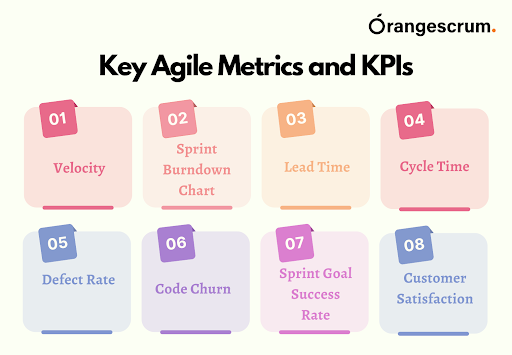
Velocity
Velocity measures the amount of work a team can complete within a given iteration or Sprint. It helps in predicting future work and understanding the team’s capacity.
Sprint Burndown Chart
This chart illustrates the progress of work within a Sprint. It shows the work remaining each day, helping the team stay on track to meet its Sprint goal.
Lead Time
Lead time measures the time it takes for a task or feature to go from the request stage to completion. It helps teams identify bottlenecks in the workflow.
Cycle Time
Cycle time is the duration between starting work on a task and completing it. It provides insights into how quickly the team can deliver value.
Defect Rate
Defect rate measures the number of defects or issues identified in a product. A lower defect rate indicates better quality.
Code Churn
Code churn quantifies the amount of code changes within a Sprint. High code churn may indicate instability in the development process.
Sprint Goal Success Rate
This KPI assesses the team’s ability to achieve the goals set for each Sprint. It provides an indicator of the team’s commitment and delivery capability.
Customer Satisfaction
Measuring customer satisfaction through surveys or feedback is crucial in Agile. Happy customers are often a sign of successful Agile practices.