SMART Goal Setting & Project Planning

Motivated people not only think about what they want to achieve, but they also give attention to processes and take actions to accomplish their goals. They frequently think about what blocks or obstacles they might encounter & where they can get help.

78% of a group of IT and business professionals reported that their business was not aligned with project goals.

All project managers vary in what triggers them. Most of them are motivated by 3 primary things: the opportunity to work with other professionals, the capacity to convince the organisation, and the desire to meet the objectives with task accomplishment.

Project success depends on each person taking responsibility for their own actions and developing appropriate change and improvement goals.

Only 64% of projects meet their goal.

Before you get too far into the project, you need to step back and plan the work. If you want successful project management, you need a bigger picture view of everything that needs to be done and how it can be leveraged.

That’s what proper goal setting and planning offer. Yes, it might slow down the start of doing, but definitely, it can save you a ton of time in solving the flaws.

Read on to get everything you need to know about proper goal setting and project planning. It’s our ultimate guide to taking off your project right.

SMART Goal Setting For Project Management
Project Planning

Goal setting is an essential part of project planning. Good project managers understand the importance of setting the right goal to deliver projects successfully and impress clients and stakeholders.

With projects getting bigger and complicated, project managers have to look beyond the general requirements, timelines, and budgets and start emphasising setting SMART goals.

Pause!

Before implementing SMART goals, do you know what exactly a Project Goal is?

What is the Project Goal?

A project goal defines the project results. It provides a link between the project and its direct effects.

More than 80% of managers say that their goals are limited in number, specific, and measurable.

Poorly defined goals or goals without objectives push a project into overruns, conflicts, missed milestones, territory battles, and unhappy clients.

Why do you need to set Goals?

The trouble with not having a goal is that you can spend your life running up and down the field and never score.

Ok, so this isn’t the first time you’ve heard someone talk about the importance of goals, and it’s surely not going to be the last

Project Planning

But apart from these things, understanding the importance of goal setting and knowing how to set goals for you is vital to accomplishing great things. Here are the top 6 major reasons why you need to set goals for yourself. So proper goal setting-

  • Propels you forward
  • Transforms impossible ways into possible ones
  • Helps us believe in ourselves
  • Holds you accountable for failure
  • Tells you what you truly want
  • Help us to complete our project on time

SMART Goals in project management:

Technology is rising vigorously. Project managers are trying to figure out the best solution to succeed. Now the question arises, what type of goal should be set up? What are the guidelines to follow while creating SMART goals?

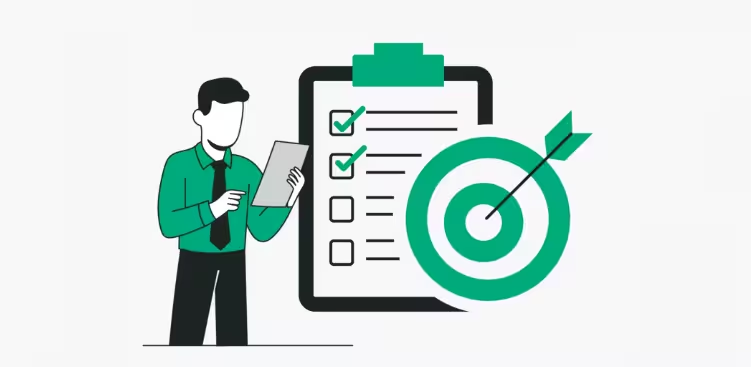
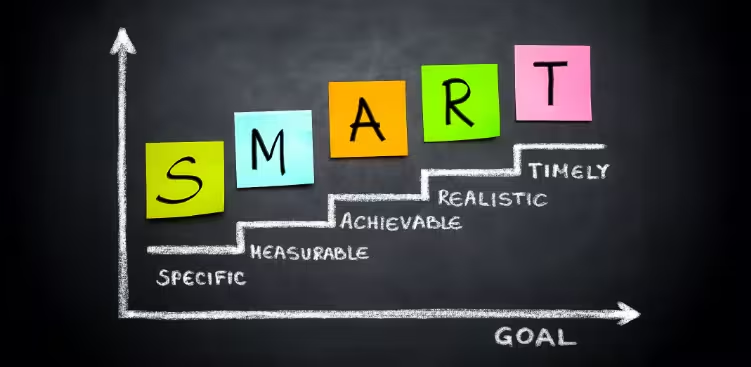
In project management, SMART is a term that stands for Specific, Measurable, Achievable, Realistic, and Time-bound

It mainly refers to the criteria of setting goals and objectives in a way that they can be easily achieved. The whole concept behind this is to increase effectiveness.

Specific: Goals must be clearly defined

If you aim at nothing, you will hit every time.

Imagine you have to shoot an arrow without being given a target. Where would you aim? This is a common example of what you may face without a goal or target in mind. Just like how sun rays can’t burn anything without a magnifying glass.

The same thing may happen in project management as well, without a project goal.

Most organisations have a 70 percent project failure rate.

Project goals must be easy-to-comprehend and well-defined. Multiple members work on a project & it’s possible that each one of them may have a different understanding of the objectives.

So the project goals must define the 5 W’s (who, what, when, where, and why) regarding the project.

A clear goal can

  • Give direction
  • Show progress
  • Help prioritize
  • Kill procrastination
  • Give motivation

Measurable: Your goals must be trackable

Establish concrete criteria for measuring progress towards the achievement of each goal you set. When you measure your progress, you reach your target dates, stay on track, and experience success.

Proper measurement indicates your actual position in the progress chart and how much work is left to do.

Before wrapping up the day, it’s important to check the work you’ve done on that particular day, as it might boost the morale of team members and encourage them to work harder

Project management software like that of Orangescrum can be used to plan goals and track the overall project progress.

Achievable: Make sure your goals are feasible

When you identify goals that are important to you, you start to figure out the ways you can make them come true. You develop strategies, abilities, and skills to achieve them. You can achieve almost every goal if you plan your steps wisely.

Goals that may have appeared far away gradually move closer and become attainable. It’s not because your goals shrink, but because you expand to match them. When you list out your goals, you build your self-image. You see, your goals can be achievable and develop the attributes that help you to achieve them.

Similarly, every project manager should set goals that are actually feasible and respectively accepted by the team members. For a project manager, it’s helpful to have a complete idea of the strengths and weaknesses of team members. Hence, the project manager can be able to know what should be assigned to whom.

Realistic: Make sure your goals are practical

Only 2.5% of companies complete 100% of their projects successfully.

A realistic goal accommodates real-life challenges and allows room for improvisation by the individuals involved. It is impossible that everyone’s focus will be on the same goal all the time. There are always other major issues needing attention. Moreover, the goal must be relevant to those who are going to work on it.

Setting unrealistic expectations could lead to failed projects. All the goals, milestones, and objectives included in the project should be achievable. It is vital to consider factors like resources, costs, time, and risks

Realistic is therefore about the feasibility of the goals. They must have the capacity, resources, and authority to get started and achieved. Your goal is probably realistic if you truly believe that it can be accomplished.

Time-bound: Your goal must have a deadline
Project Planning

Organizations with 80% or more of projects being completed on time and on budget waste significantly less money due to poor project performance.

If you have no idea what is a fair deadline to set for a goal, then I’m sure you should set one. You must prepare one to properly invest time on that particular project. Along with that, if you’re not setting up your deadline, then you can’t be able to finish your project in-time. Properly manage your resources so that deadlines won’t suffer.

Goal setting isn’t limited just by writing down your goals on a paper or a project management tool. Rather it also comprises multiple other practices like getting the right people on board, building an effective framework, finding high-impact initiatives, and so on.

So you’ve found the goals and objectives of your project. Then what’s next?

Build a PLAN.

A proper plan helps you to define the full scope of a project but it also helps you stay focused, set goals and objectives, meet deadlines, measure success and debrief the entire project.

The Ultimate Guide to Project Planning

Project Planning

Specific: Goals must be clearly defined

There’s a misconception that many people think- project planning and project scheduling are common. That is the list of tasks and dates that define you what to do and when.

But let me clarify- the schedule is a part of the project plan, but it is NOT the only part.

Project planning is a method for asserting how to complete a project within a specific time frame, with defined stages, and within assigned resources.

49% of 840 federally funded projects were found to be poorly planned, poorly performing, or both.

Project planning carries the following activities:

  • Setting objectives
  • Planning the schedule
  • Identifying deliverables
  • Making supporting plans

P.S.- Supporting plans include those related to- risk management, human resources, and communication methods

Proper project planning keeps everything running smoothly. It carries different processes like the budgeting process, change management process, what quality measures are important, and so on.

Why have a plan?
Project Planning

Well, think in this way- can you build a house without a plan? Well, chances are probably NOT. it sounds stupid even think of building a house without a plan. Then why to do this in business?

“Planning is bringing the future into the present so that you can do something about it now”

Many people don’t see the value of having a plan. But we must comprise the benefits of properly planning your projects. But we must comprise the pros of proper project planning. It’s the first step to success and without your first step, you can’t move forward.

Hundreds of reasons are there for proper project planning. Here, I’ve shortlisted 5 common reasons why a project plan is important!

  • Defines the scope of the project
  • Identifies the key roles of resources
  • Finds out challenges
  • Helps in project estimation & management
  • Defines goals, objectives, and deadlines

Planning streamlines the doing.

So follow proper project planning and keep your projects on track.

Suppose you’re convinced to go for the project planning. Now the next question arises, how long does it take to plan! Let’s see…

How long it takes to plan?

The best way to estimate how long your project planning will take is to look at similar projects which have completed before and check how long it took them to complete.

The elements of project planning

A good project plan makes any project manager’s life easier. From restricting scope creep, missed goals, and over budget to minimising frustration and stress.

But what exactly goes into a good project plan?

Include these 10 essential elements in your project plan to keep your team running smoothly and your stakeholders satisfied!

  • Outline business and stakeholder needs
  • List of requirements and project objectives
  • Project scope statement
  • List of delivery and estimated dates
  • Detailed project schedule
  • Risk assessment and management plan
  • Defined roles and responsibilities
  • Resource allocation
  • Quality assurance or QA plan
  • Communication plan

How to create a project plan?

Spend more time with your team:

  •  clarifying what you need to achieve together
  • working out the processes you need to get there
  • developing a plan for how you are going to take this forward

Ultimately, the project manager is responsible for making the project plan, and while you can’t make up all the content yourself, you’ll be the one banging the keys to type it all out. Use templates where you can save time.

5 Basic stages of making a project plan

  • Define the direction
  • Identify tasks and set up online tools
  • Be fearless and link tasks
  • Assign resources
  • Set the baseline and monitor the process

Goals help people to build clear plans for what they need to achieve and how they will leverage those achievements. Without a goal, a person has no clear plan for success.


 

Budgeting & Cost Control

Budgeting and Cost

Cost is usually one of the first questions that come up in any project. Making a project budget is an important part of any project management. Various things are there to take into consideration while calculating a budget for the project, like employee cost, software expense, necessary equipment purchase, etc.

Project budgets are a reflection of project work and the timing of that work. A comprehensive budget provides management with an understanding of how the budget will be utilized and expended over time for projects.

A report says, “55% of project managers cited budget overrun as a reason for project failure.”

In project management terms, an S-Curve is a mathematical graph that portrays relevant cumulative data for a project, such as a budget plotted against time. The reason it’s called S-Curve is that the shape of the graph forms a curve like a letter “S”.

The S-curve in project management is used to track the project’s progress. In today’s business climate, ensuring that a project is on track and on a budget is compulsory to its success.

Budgeting and Cost

Budgeting and cost control involve the estimation of costs, the setting of an agreed budget, and the management of actual costs against that budget.

What is Project Budgeting?

Don’t let the idea of project budgeting frighten you.

Budgeting and Cost

The budget for a project is the sum of the costs of individual activities that the project must accomplish.

Budgeting is important in the development of any major business project. Without a well-planned budget, projects can scatter and be left incomplete. Budgeting is not an easy process. It provides a number of different advantages that a project manager should consider.

The advantages of budgeting in a business:

Establishing Guidelines

A project budget allows you to establish the main objectives of a project. Without proper budgeting, a project may not be completed on time. It allows the project manager to know how much he can spend on any given aspect of the project.

Cost Estimating

Once you set the budget, you can determine how much money to spend on each component of the project. You also decide what percentage of the available funds to allocate to the remaining elements. This clarity helps you decide whether you can complete the project within the available budget.

Prioritizing

Another advantage of having a project budget is that it helps you to prioritize the different tasks of the project. Sometimes it might seem to be completed at once, but it doesn’t happen due to some inefficiency. A budget will allow you to prioritize which parts of the project can be completed first.

Before we check how the budget is developed, it’s important to understand why it’s important.

Why the project budget is important?

Organizations with 80% or more of projects being completed on time and on budget waste significantly less money due to poor project performance.

Basically, there are 2 main reasons for which your project budget is important. These are;

The approved budget is what pushes project funding. It shows stakeholders how much money is required and when it’s needed. The ability to get materials, equipment, and people when they are required is dependent on the funding provided as a result of your budget.

Budgeting provides the basis for project cost control. By properly measuring the project’s actual cost against the approved budget, you can be able to determine if the project is progressing according to the plan or not.

Benefits of Budgeting

On average, projects go over budget by 27% of their intended cost.

A carefully planned budget allows a business to track where they’re financially standing. This allows for long-term, strategic planning for everything from current operating costs to potential expansion.

Other benefits include

  • The potential to attract investors
  • The ability to set sales goals
  • The chance to open lines of credit
  • The ability to make decisions about salaries, bonuses, benefits, and overhead operating expenses
  • Easier tax preparation

Budgeting is important for small-business owners. Being even a little off of the track on cost projections can have a devastating effect on a small operation.

How to Create the Right Budget for Your Project?

Now you know what a project budget is and why it is so important. Now, you need to know how to prepare a budget for your project.

Most organizations have procedures, policies, and guidelines for handling cost budgeting. The first is to ensure that you are familiar with your organization’s tools and budgeting processes.

To prepare your budget for your projects, 5 vital factors are there to take into consideration. Those factors are described below;

  • Activity Cost Estimates
  • Basis of Estimates
  • Scope Baseline
  • Project Schedule
  • Resource Calendars

Activity Cost Estimates

It is the process of accessing the possible costs to different activities involved in a particular project management strategy. It also involves controlling the costs so that a project can be completed within the estimated budget.

During activity cost estimation, changes to the activities may arise which can affect the cost estimate. To resolve this issue, having a cost management plan is necessary. Without this, it is difficult for projects to commence.

Basics of Estimates

It is an important tool in project management. It includes project managers and estimators to calculate the total cost needed for the entire project. In short, it is a method of documenting different important aspects of the project cost estimate to eliminate the cost risk of the project.

It should be a clear document so that those involved in project management can be able to understand. It makes it easier for those in project management to determine the funding option, cost, cost risk, opportunities, and many others.

Scope Baseline

It is a part of the project management plan and acts as the reference point through the entire project. It has several components like the project scope document, the WBS dictionary, and the WBS itself.

The project scope document explains the product scope descriptions, project deliverables, and acceptance criteria. WBS is the detailed description of the set of activities that are required in the project.

Project Scheduling

Project scheduling is a process to communicate what tasks need to be done and which resources will be allocated. A project schedule is a document collecting all the important work needed to deliver the project on time.

You can use the project schedule to determine the cost budget over time. For any specific calendar period, you combine the planned activity costs to create the time-phased budget.

Resource Calendars

Resource calendars will let you know which and when resources are assigned to the project. Using each rate for each resource and combining them with the project schedule, you can determine resource costs over time.

It refers to the specific calendar that lists all the working days as well as all the holidays that the project management team and the project manager need to utilize. So that they can be able to determine which specific resource is being used and on which dates they may be inactive.

So this is how you can create the right budget for your project. But after creating the right budget, the next important thing is to keep your projects in the budget.

How to Keep Your Projects in Budget?

Most of us are acquainted with budget overruns. We’ve all had those projects that end up over budget, and we are left wondering WHY! Keeping projects on the budget is extremely important for overall profitability and employee morale.

Here are 5 strategies to keep your projects on budget-

Set a realistic budget at the initial stage

One of the best ways to create an effective budget is to look at the expenses from past projects. If this is your first project, then review your budgets from similar projects. If you have worked with the client before, then review past budgets to determine potential hiccups.

Avoid scope creep

Scope creep refers to the changes or uncontrolled growth in the scope of a project. Though it’s common to have some aspects to have a project change once it’s in progress, it’s helpful to create progress for changes and to have a team skilled in this area.

Create a framework to discuss the changes with the client. That will definitely help project managers to keep the goal in mind. This is vital for properly budgeting your team’s time and keeping the project moving forward.

Track resource time

In most companies, your team is your most valuable asset. Some firms don’t closely track staff hours. Without proper time tracking, it’s hard to know how profitable certain projects are.With accurate time tracking you can show your client exactly how much time and effort their projects take. You can figure out if your employees are spending more time on those work which doesn’t result in a better project outcome.You can extract who is working for what, and for how long, so you can adjust task schedules and keep projects running on time.

Know your bill rates

Most companies can’t bill for every hour of time. Suppose your team worked 40 hours last week but only billed for 30 at the rate of $100 per hour. That means, your effective bill rate is $75 because it takes the non-billable time into account.

Knowing your bill rates make it easier to create accurate budgets. Hence you can get to know which resource got paid how much. Many software solutions are there which can make this process simple and easy.

Use project management software

77% of high-performing projects use project management software.

More than expected, PM tools are providing valuable business insights for project management. Such tools help to determine where projects are going and provide project managers with a structure they need to strategically utilize their teams.

Orangescrum is an innovative project management software with time tracking, task management, resource management. It is a valuable tool in tracking staff time and calculating key performance indicators, such as your effective bill rate, utilization rate, and profitability.

To create your project budget, simply you just sum up the estimated costs of the individual activities. This can give you the information that you need to create a cost baseline.

Cost Control

Budgeting and Cost

Cost control is the process of identifying and minimizing business expenses to increase profits. A business owner compares actual results with expectations. If the actual cost is higher than planned, then management takes action.

For example

As an example, a company can obtain bids from other vendors that provide the same product or service, which can lower costs. Cost control is an important factor in maintaining and growing profitability.

Key Takeaways

Cost control is the practice of identifying and reducing business expenses to increase profits, and it starts with the budgeting process.

Cost control is an important factor in maintaining and growing profitability.

Outsourcing is a common method to control costs because many businesses find it cheaper to pay a third party to perform a task than to take on the work within the company.

Project Manager – The Dos & Don’ts!

Project managers are the backbone of the day-to-day running of many businesses. They are at the forefront of bring out the best from the people, process and technology at their disposal. From managing organization resources, defining procedures to keeping them all relevant, a project manager must plan and organize every aspect of the project, while also motivating everyone involved. In the end, effective project management means successful projects.

Study says, “80% of high-performing projects are led by a certified project manager”.Project Managers are working harder than ever before to adopt and work with more knowledge, tools and technology available to them. The rapid changes of the business world, increased competition, technology advances have raised the bar for all project managers. Average would not cut it anymore!
With the added uncertainty, Project Management can turn out to be stressful. But then there is always scope for consistent improvisation, effectiveness and going beyond the traditional ways of running projects.We will go through some of the proven do’s and don’ts when put to good use have reaped huge benefits for all involved starting with the project managers, projects, teams, the business and most importantly the Customer!

Things Project Managers should DO

Focus on Customer Needs

A report from 2008 says, “Price is not the main reason for customer churn; it is actually due to the overall poor quality of customer service”.



Easier said than done! The single biggest success factor for a project is whether it delivers what the customers really need. Don’t get caught focusing too much on what they want or their requirements because these are often not equivalent to what they truly need.

You need the right mix of the business acumen & domain expertise to nail this one. I am more inclined towards the business acumen here because it’s a tricky one. Its need adaptability, your ability to step into the customer’s brain & understanding your most important stakeholder’s vision.

E.g. I want a world-class data center with the top notch technology available! Well this requirement of your customer is not out of a sudden new found love for technology. A domain expert would dive straight into the best architecture and tech he can make available. But the one with the business acumen will look right at the center as why, what is it that has made your customer willing to spend millions in building a state of the art facility.

Direct your thoughts towards his business, his outcomes and you will find the answers there. Show your customer that you understand and agree what is of most value to him and you have won the most important battle of the project while sealing the success of your project right there. You built yourself the bridge that will sail you through tough times ahead!

I say this because, I haven’t seen a project fail that had the full backing of the Customer! Have you?

Get the team EXCITED

The early stages of any endeavor are the stepping stones of its success. Uncertainty, anxiety, true nature & expectations of the endeavor at hand must be dealt with adequately.

Project Initiation & Planning is when you work with the team to define exactly what needs to be done. Share the vision as precisely as possible!

Set the expectations right with all involved to make that everyone understands the objectives, their roles and deliverables. There should be no beating around the bush.

It’s worth phrasing all desired outcomes in terms of business value or benefits: in other words, answer the What, Why, When, Who and How of your project.

Monitor the Schedule and Budget

Be disciplined! Project Schedule & Budget Management is all about discipline and foresight!

Start small, start slow. It is very important to depute enough hours to have a 360 degrees view of the entire project. Hold stakeholder meetings with all the key stakeholders and domain experts to define as robust and realistic a schedule and budget possible.

Incorporate sufficient padding in terms of time and money for unexpected twists. They can be changing business landscape, regulatory changes, technology shifts etc

Constant Monitoring & Control of your schedule and budget is a MUST! As a project manager deploy all relevant mechanisms to have the real time picture of how your project is progressing. Is your actual implementation in sync with the allotted time and cost?

It’s a given that projects rarely ever stick to the original plan, but staying as close as possible to the schedule and budget is important. Before the project veers too far away from the original plan, it’s best to notify the relevant stakeholders for timely actions and adjustments.

Share Information

We re-emphasize the value of meaningful, timely communication from the previous chapter here. For the uninitiated, know full well that “information management” is one of the cardinal responsibilities of a project manager.

What does that mean? Well for starters, information was never meant for hiding. It is there for a purpose. Information is all about sharing. Hiding key project information directly affects the progress of the projects. It creates conflicts among the project team, distrust with the stakeholders, prevent timely resolution of issues & sow seeds for mishaps waiting to happen.

Well, we can all argue that not all information is for all the people. And rightly so! And exactly why it’s all the more important for a Project Manager to define the Who, Why, When, How and What while undertaking projects. Disseminating information is a Critical Success Factor (CSF) for a project’s success. Open door & transparent organization policies are there for a reason. They save and generate far more revenue than what is spent in withholding them.Easy sharing & access to information is one of the keys to keeping everyone on the same page at all times. And a very simple reason for doing it is to have the right support at the right time. Team members would be more than willing to lend a hand when they know what they are getting into, they have the skills to help and should step up.Isn’t this enough for you to take a quick check on what policies and procedures do you have in place for communication flow for your projects?

BE supportive of THE Team

It’s easy for a project manager to forget to appreciate the high performing individuals in the team. Project managers always tend to look ahead, focus on the next steps, and simply forget about the present wins and achievements, but recognizing that someone is doing well in a project team boosts morale, commitment and overall long-term project performance.As a PM step up to take ownership of any team failures or misses. If you are quick in reprimanding the team for a lag be equally and more appreciative of their efforts. Ensure that all team members have the pre-requisite question – “What’s in it for me?” well answered and follow through to deliver on that promise.Report says, “About 75% of employers rate teamwork and collaboration as the most important aspect”.

Prevent Unnecessary Distractions

It is very important that the project team’s singular focus must be to deliver with quality. This also means the project manager has to shield the project team from distractions, requests or external feedback.

Prevent direct & unhindered access of the customer to the team at all costs. It will help you in the long run. Keep in mind that not all team members are capable of understanding the language of the customer. Communication and understanding gap can wreak havoc on the project and all the good work done so far.

Study says, “44% of employees want a wider adoption of internal communication tools”.

You will have an uphill task if your teams aren’t habituated being exposed to changing priorities and objectives. It is best to have them discussed and agreed without involving the team until required, to keep the focus and motivation high.

Scope creep and uninitiated feedback can act as dampeners and must be prevented as much as possible. Have well-defined processes, objectives and time bound goals in place for effective planning and execution. Leave no scope for guess work as productivity is high when each member involved knows what’s required of him and when.

Stay Positive & true to the goal

A report says, “Only 64% of projects meet their goals.”

As a project manager, you should learn to remain positive in all situations irrespective of the project stage, challenge or set-back you are faced with. Stay focused on the end goal: delivering value toyour client.

Maintain trust in your team and the project plan and don’t lose hope at the first sight of trouble. Share the situation as transparently as possible with your team, be open to feedback and suggestions, seek help and invite them to be an integral part of the solution.

Do not ever try to be the Hercules of the project. Get the team to rally and unify their efforts in making things better together. It’s always a team effort.

We’re in it together!

Collaborate, Collaborate AND Collaborate

Collaboration must be second nature to a Project Manager. He MUST always encourage and invite collaboration from all possible sources. A collaborative attitude makes you accessible and approachable thereby people find it easier to communicate with you.

97% of employees and executives believe lack of collaboration within a team impacts the outcome of a task or project.

Not only that, it also makes people shed their inhibitions and be more forth coming in sharing their ideas. People thrive when they are provided an environment of free and open communication. As a PM you must enable and propagate its benefits.


Provide the team relevant platform(s) to communicate ideate and brainstorm freely. It makes solving roadblocks easy & quick, enables faster learning, removes information silos and reduces administrative overhead.

Encouraging a collaborative environment where team members are free to work together will ultimately lead to high quality deliverables in the long run.

The team is not meant to work in silos – they’re there to work together!

Things Project Manager should NOT do

Don’t be the Mailman


Being a PM entails lot of communication, reports, statistics, updates and email management. Basically tying you to the desk. Don’t be chained.

It is imperative that there will be lot of emails and inbox management too. And that’s the trap you want to avoid. Emails kill your time, distort relevance of information at times are not an all-weather communication friend.

We all understand its utility but over-reliance is a burden. There are umpteen aspects of your project that need your attention and emails won’t cut it. Nothing ever beats the Human interaction and connect.

You have to be out there, building rapport with the team, gaining the stakeholder’s trust and confidence of your customer. Try to be available for your teams and customers alike to reach out to you in-person where possible. Things happen quick with less communication barriers

E.g. you don’t get the true picture, view of the other person’s thoughts over an email or skype chat.

We all have had our share of email fiascos and so let’s keep them to the minimum if they are unavoidable

Be an active Project Manager!

Do not procrastinate

project manager

Yeah! This sounds like been there done that! We all are guilty of it at some point. But when it creeps into your profession as a PM things are bound to turn worse.

Dealing with problems and obstacles head-on is an important attribute for a project manager. You cannot close your eyes, delay or ignore a lurking issue. Instead you must have an eye for such issues and address them on priority.

Timing is essential in handling all project related issues. You delay and you drop the ball. What’s worse is, the delay increases the harm manifold. Nip them in the bud by all means.

It is true for all other aspects of project management too – status updates, review meetings, UATs, PMO review etc. A delay from your end will result in reduced interest by your stakeholders or worse make them anxious and undo the trust you built so painstakingly.

Once identified, share all relevant info regarding the issue/risk on priority with the stakeholders. Clearly articulate the issue, its impact to the project, possible actions, who can action and the time & cost involved.

43% of highly engaged employees receive weekly feedback.

As you know – Prevention is always better than cure!

Micromanagement – No Thanks

My PM – You are meant to be a leader not a book keeper! Face it!

project manager

Micromanagement has never helped achieve great results. If only it delays progress, impedes success, and reduces the quality delivered.

Study says, “79% of employees have been micromanaged.”

There is a significant effort and time drain when micro management is the norm of the day. Not only you propagate distrust, negativity and pessimism but also drive the team away. For a very simple reason – no one likes to work for someone who isn’t appreciative of their efforts.

Productive time that could have resulted in business growth and success is spent on massaging egos, wasteful activities that do not support the concerned endeavor and the worst of all building evidences that will be of no use.

And, the result being a huge energy drain for you and all involved. Instead setup mechanisms for timely update sharing and progress reporting. Enable forums to share and solve identified problems and maintain transparency around their cause, priority and resolution.

The organization has to pay handsomely for your micromanagement. Remember that! And hence, in the greater good of the business and teams it MUST be discouraged at all times.

No Meetings without Outcomes

My PM – You are meant to be a leader not a book keeper! Face it!

project manager

Meetings are necessary, yes. But, they are also one of the biggest distractions we face as project managers. Author Jason Fried gave a very compelling presentation at a TED event titled Why Work Doesn’t Happen at Work. He cites two primary causes, what he refers to as the “M & M” factor – Managers and Meetings.

Before setting up meetings, define a clear agenda for the meetings & the outcomes you wish to achieve and invite ONLY the “real” attendees of the meeting who can help you get there.

Stick to your meeting schedule and steer clear of the meetings within the meeting syndrome. Any identified points not relevant to the current meeting must be parked for another meeting if time doesn’t accommodate them.

Similarly, avoid the temptation to attend every meeting you’re invited to. If the invite misses out on the 2 O’s – objective and outcome decline by all means or ask the organizer what is expected of you in the meeting. Or a simple – “Why am I invited?” mail would help.

Note, the billing meter is on for every minute your resources spend on these no outcome meetings and so is your schedule clock!

Think before you schedule!

Credit is all Mine!

project manager

OK! Quiz time! How many times have you come across managers, project managers or members who are all about themselves and take credit for everything under the sun irrespective of their doing?

If you’re lucky very few. But sadly that isn’t the case for many others. A leader is someone who would never indulge in hogging the limelight.

PMs, you must realize that you are there to enable outstanding outcomes. Your success is not these outcomes, but enabling and replicating these outcomes over and over again. Possibly very frequently!

Imposing yourself on every good outcome harms the team’s morale and sets a vicious chain of unproductive actions. You shine when the teams believe in the cause and go beyond what is required to achieve more than optimal project success.

project manager

Demotivated troops do not win wars and you taking credit for other people’s work does just that. Rather celebrate small wins, highlight your team’s strengths, appreciate their efforts and encourage them to push boundaries – mentally and physically.

Allocate some part of your project budget for a rewards and recognition program.Encourage healthy competition within the team to outdo themselves which will motivate them to help each other and in turn the greater cause – Customer Success, Increased Revenue and Productive Employees that are not easy to come.

Note: if you are one of those people who shine by diving into other’s success very soon you will have only failures around you!

Rise above your pettiness and let others shine!

So what do you think?

project manager

It is very clear that a project manager has to juggle between numerous stakeholder priorities and wear different hats throughout the day, every day!

Difficult as it may be, but it is the truth of the day and it is this diverse demand that makes Project Managers an integral part of all organizations. We all have the right intentions at heart, are motivated but it is the chaos around us that blurs the vision we set to realize in the first place.

Thus, before a PM takes on a project, he must organize himself, start with the end goal and never lose sight of it till achieved. We must understand that it’s the PMs that hold the entire initiative together. A PM connects and drives budgeting, resource allocation, resource utilization, time management & tracking, stakeholder expectations, business continuity, organization priorities, technology, polices and processes to be used, team productivity and customer success. All of them simultaneously

The sheer responsibility involved here makes it crucial for a Project Manager to have high business acumen, some level of domain expertise, knowledge of technology he is dealing with to high emotional intelligence and the whole gamut of soft skills.

Moreover, a PM is under constant watch and it doesn’t make things easier for him either. Thus it is all the more important for him to build a high performing ecosystem around him.

Our effort with this chapter is just to give all PMs a little more ammunition and incentive to build that dream team that can turn those collective dreams into reality!


Communication – Your Antidote to Project Stress!

Project Communication
You can never put a value on Project Communication or the lack of it. Simply put, it is invaluable and outright precious to every sphere of your life. More so when it comes to your work and professional success. Take a quick walk down memory lane, and you will find many small incidents that could have turned out better or changed decisions in your favor. It can be as simple as getting buy-in for your idea, saving a friendship, or winning that big deal you’ve worked tirelessly for. So, what is it about Project Communication that makes it so crucial for us irrespective of who, what, and where we are? From my experience, there are four specific elements that must be attended to in all our communications

1. What?

You should be absolutely crystal clear in knowing “what is that you wish to communicate”. One must accord that extra care in segregating the emotion and the facts in your communication to ensure the point is well received. Else emotions will generate a further emotional response thereby diluting the facts & defeating the very purpose of your communication.
It is furthermore important to be very concise and crisp with no beating around the bush and neither keying in info that can be shared at a later stage.

Project Communication

Now, this is no rocket science, each one of us are aware of it, and even then one can safely say that it is overlooked 95% of the time and practiced far too less. And this is what separates the hugely successful people from the not so lucky ones!

2. Whom?

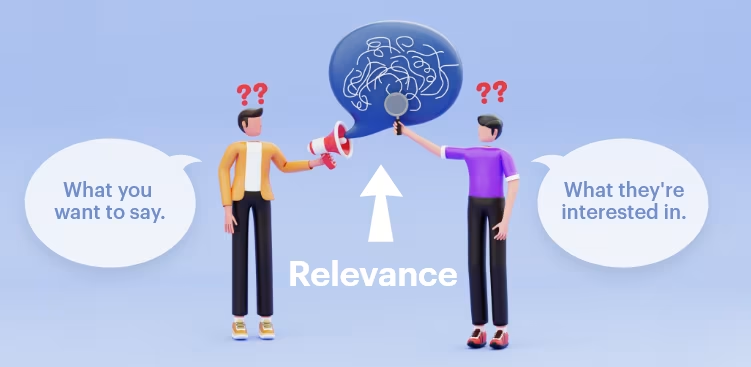
The second element in your communications is to “identify & understand” your audience. You must filter information based on who needs to know what and to what extent. In most cases, we fail to identifythe right people and share far too much or too less. And in both the cases you run the risk of confusing and/or alarming them. Not very helpful, is it?

On the other hand, knowing what to be shared is very crucial in meeting your objective in the first place. This where understanding your audience comes into play.

            Project Communication                                

A simple e.g. you cannot go to your steering committee with a list of bugs or open Change requests while presenting a project status. That is more valuable to your project team who will actually work on them. Your leadership just needs to know the bigger picture, the figures and facts, what is on track, what is causing delay and what needs their attention and help.

3. Why?

Once you have taken care of the What & the Whom you must very clearly indicate as to Why the information is being shared with them. What’s in it for them? It is evident from experience leadership is always over burdened with things that need their attention. Not having it called out explicitly in your communication will add to the delay and may derail your project or request altogether.

On the other hand, with proper action items, the recipients would be forthcoming in giving their support, buy-in or take required action in a timely manner thereby contributing to the project success.

Project Communication                                                  

Know full well that once you miss the opportunity to garner their attention or support, you are setup for an uphill task which obviously means more time and work at your end. And in cases of urgency you may not have that luxury there by making matters worse!

4. When?

You may have got all the above elements perfectly sorted, but you skew the When and you lose! As the saying goes, being at the right place at the right time! Timing is the most important element in your communication.

Timely communication not only sets things in motion but is also helpful in prevention of mishaps and reduces response times in crisis situations. And yes, it definitely helps in setting the right expectations thereby eliminating any cause of unpleasant surprises in the future!

The When is basically well understood by the proverb – Prevention is better than cure!

Having understood the 4 key elements in communication, let us explore the challenges & strategies we can deploy to maximize benefits of optimum communication in our business and projects!

Information Flow in our Projects

Project Communication

Organizations across the world run multiple projects simultaneously involving multi departments and geographies as well. Some projects may be with in a single team and straight forward and some may be strategic in nature. Thereby, organizations have to be nimble to handle varying levels of project complexity and execution. Add to it the cultural differences or preferences that comes in with a diverse workforce.

So, a typical communication challenges list would look like:

  • Emails & Spreadsheets – tons of it!
  • Remote Teams spread across geographies and time zones
  • Use of multiple tools
  • Communication styles and preferences
  • Building rapport and Trust issues
  • Getting timely updates

With the above glimpse of the mess we are all capable of getting ourselves into, let us take a pragmatic approach on how to turn each of these obstacles into opportunities for

  • Greater project success
  • Higher customer satisfaction
  • Happy and energized workforce
  • Matured organization processes
  • And rising revenue levels

Emails & Spreadsheets

Ah! A project manager’s eternal love Not exactly. Project Managers across organizations are synonymous to emails and spreadsheets for their project team members. It is sad but true.

Project Communication

Emails and excel sheets are powerful communication tools in their own right but do not always fit in the greater scheme of project management activities. You cannot wait for emails or excel updates when you are fire-fighting or amidst major product/service release with the ever so tight deadlines right around the corner.

Just take the following aspects of managing projects that need our utmost attention:

  • Misunderstood requirements
  • Conflict resolution
  • Stakeholder perception or expectations
  • Customer reviews & approvals
  • Risk mitigation

And imagine addressing these via emails. Not a great idea is it?

Each of these require beyond the edge planning, transparent and timely communication via a medium that enables real-time information sharing with all involved and most importantly one that is relied upon by one and all.

Emails are great for not so urgent notes, ideas and plans. Or when you have to reach a wide audience spread across various time zones. You can rely on emails for one on one conversations and discussions mainly involving confidential information.

Consensus building, troubleshooting and ideation cannot happen over emails and excel sheets. They require the human touch, instant collaboration and quick answers.

And these are the very building blocks of a successful project delivery that teams rely on collaborative software and platforms. The primary benefits being

  • Accessible from anywhere, anytime
  • Ensure the right people receive the right message at the right time
  • No distractions & focus on actual work and outputs
  • Negligible unnecessary manual efforts
  • No scope for administrative delays

Remote Teams spread across geographies and time zones

Technology has reduced boundaries like never before and distances do not matter when it comes to running your business. This also means increased access to the global talent pool to build the best team possible for your projects.

Having remote teams is the new business order as the benefits far outweigh any perceived drawbacks.

Project Communication

A business may deploy remote teams for better work-life balance, proximity to customer locations, delivery centres or cost-effective locations in terms of labour & real-estate, compliance & regulatory requirements etc.

Now, to ensure maximum output and optimum success of the remote team model, the communication aspects must be well-addressed.

Time-zone lags & information delays are the most common communication disruptor when it comes to delivering with remote teams at the helm. And these can be best handled by defining:

  • The right communication medium
  • Communication frequency
  • And a robust communication strategy

The most common strategy deployed is that of having regular checkpoint meetings at a time that is conducive to stakeholders from different time zones. “Follow the sun” is a successful and widely popular model deployed for collaborating with teams at either ends of the globe.

Having a business model is one thing and running that model successfully is an uphill task. Visionary Project Managers are quick to lay out

  • Robust task management plan
  • Plan the task start and due dates well
  • Transparent task and resource allocation
  • Clarity around the deliverables
  • Desired quality levels
  • Precise roles and responsibilities

With the above actions rightly executed, we move closer to strengthening our business model, deliver optimally & providing a thriving environment for our teams to perform and excel. All of them with a direct positive impact on the customer happiness index and revenue.

Use of multiple tools & Communication styles and preferences

This one is a bummer! Major project discrepancies begin when the teams start building their own “source of truth”. A highly dangerous trait that must be curbed with utmost diligence. Within no time you start seeing information silos being created that send mixed signals to the team members. And before you realize there is absolute chaos. No one knows which source to rely on, what data to trust and present.
Project Communication                                             

The consequences and disruption to your overall project plan and execution is just unimaginable. And the most heart-wrenching aspects are

  • You now have maybe 100s of hours of data cleansing & massaging which were never part of your original effort estimates
  • Unavoidable non-billable work
  • Absolute waste of time and money
  • Immediate resource requirements and burn
  • Customer and Stakeholder trust at risk
  • Most importantly a major loss of face for a Project Manager

Worst nightmare of any project manager ever! So how do we prevent from this data storm?

The foremost thing to do is have your “ground rules” established. Use your experience and knowledge of the company culture to understand what works best for the team.

Note: nobody likes managing data, writing updates, maintaining time logs etc.

The idea is to provide mediums that encourage your team to be forthcoming with sharing updates preferably very precise and on time. So what must the ground rules be?

  • Single source of truth at all times
  • Team’s benefits and greater good over personal preferences
  • Grant relevant access to all project members to this source
  • Define the frequency at which they are expected to update the source
  • Make it as easy as possible for them to share and receive the required info
  • Ensure each team member knows what info, format and update is expected of him

When you have a platform that is easy to adopt, obtaining team buy-in becomes easy. We all want to spend our time on things that we excel at, have passion for and love doing. And like it or not, giving updates is never part of the above list

Also, being the Project Manager, take time to understand how your teams like to communicate & what is most time saving and efficient for them.

Help them realize the benefits of having access to the right information augurs well for them. And the fact that ambiguity can never deliver tangible outcomes or anything of business value and it is highly detrimental to the overall success of the project, the team and the business itself.

Building Rapport and Customer Confidence

I have saved the most important challenge at the very end of this chapter for a very simple reason that “Customer” is the North Pole, the guiding light or the very glue that ties everything we have discussed so far.

The business, the products, services, projects all exist because of the customer and the success of each one of these endeavours lies in the success of the customer.

For the Customer, success is outcomes that have business value. Independent products and services mean nothing to them. Hence, the project manager must himself have the customer’s mind set the moment he sets foot on the project.

It is about having a clear understanding of not only the customer’s requirements and business needs, but also the outcomes that the customer so very much desires, the vision he wants realized and the mission to be achieved.

Easier said than done! You need to be one with the customer in terms of articulating, helping him shape his project’s mission and finally deliver it. This needs more than the technology know how or the implementation expertise.

Remember that you are not the only one with these skills. There are lot of other options in the market, but the customer chose you for a reason –Alignment with his definition of value and success.

You have a good start now, but how do you maintain and build upon it?

You can set a few things in motion as soon as you take the reins in your hand and build upon during the course of the project:

  • Define, agree, and sign off on the Scope
  • Ensure the customer is in total alignment with what you intend to deliver at the agreed timeline
  • Have a delivery schedule in place with some acceptable buffer
  • Invite constant feedback
  • Keep engagement levels high with constant communication
  • Be forthcoming in sharing the accurate info when things turn for worse
  • Do not hide behind the contract or indulge in blame game
  • Take full ownership of the project, its success and failure with equal gusto
  • Steer your course and prevent the customer from deviating from his original goal and mission
  • Have an in-built buffer in your project plan to accommodate any change in their business priorities and strategy – “Show them you are in charge and in full control”
  • Deliver as promised within budget, on-time with optimum quality

I derived this list from years of hard work and experience, though it’s not exhaustive. And if you successfully manage to follow half of it, you will have realized what many project managers still dream of achieving.

And yes, as I said, the list goes on, but the above points have always helped me and many of my colleagues in good stead under trying circumstances. No project comes without its own share of hiccups. Things will and always go awry once in a while, and that’s why it’s fun to be a high-performing Project Manager!

Scope, Scope Creep & its impact on Project Delivery

Project Management and Project Delivery seemingly harmless words; but can run businesses to the ground when gone wrong. It is not as simple as moving from one point to the other or setting a goal and distributing the activities among a set of people and arriving at it happily. If you are one of those Project Managers who thinks things are this simple – you are lucky!

Projects are complex endeavors with 100s of moving parts. Pick any project from your experiences so far and analyze. You will find elements like resources, time, budget, milestones, defined deliverables, company direction, change of stakeholders, change of stakeholder requirements, market conditions, competition, acts of nature etc. that need to be assessed and planned for.

You miss to account for one of them & if it skews in an unwanted direction your entire project runs the risk of crumbling like a house of cards.

Agreed that we cannot humanely control all of these elements but definitely a few of them and mainly the critical ones –

Scope, Timelines & Budget!

The most interesting thing about these three elements is that the same people often control, change, and manipulate them.

  • Existing or New Stakeholders
  • Change in stakeholder requirements
  • Business demands
  • Company direction etc.

Let us see how any unplanned changes to these elements impact our deliverables and their quality.

The root of all troubles for any project lies in Scope changes or Scope Creep as commonly referred in a purely project management terminology.

Understanding Scope & Scope Creep

Defining and understanding Scope of a project is the most important activity in the project management life cycle. Simply, because Scope or the statement of work [SOW] is the very basis and the bible that guides your project from start to finish

The “single source of truth” that pervades and resolves all conflicts!

At the onset of a project, being a Project Manager you must spend a fair amount of time to understand:

  • The requirements
  • Ask more and more questions till you are sure you understand your client and stakeholders expectations.
  • What are the business drivers of the project
  • What is the fundamental need of the project
  • Why the project is being funded and prioritized as it is

Once you have all the above answers, you must proceed with documenting them, circulating them among the stakeholders, decision makers to ensure they understand, agree and sign-off.

A point worth noting here is the documentation is to ensure everyone involved with the project knows very clearly as

  • What WILL be delivered
  • What WILL NOT be delivered

In addition, to this allow for a few days for your clients and executives to review and request any modifications. But at the same time do assign an “offer expires by date” to add the much needed attention & focus to this binding document.

The expiry date triggers a very helpful chain reaction where all stakeholders become keen to ensure ‘their objectives’ are part of the project scope. Thereby, there is increased participation, debate and Q&A to further refine the end objective and project goals.

Do note that the increased participation also means greater stakeholder alignment which is one of the critical success factors for successful project delivery.

Having performed the above due-diligence, ensures that everyone understands the deliverables, the time, efforts and cost required to meet the overarching project goal.

So far so good! You have done everything a good project manager MUST do.

Now, let’s get to the devil that lies in actual practice and implementation – say hello to Scope Creep!

Scope Creep, simply put is adding new features, altering existing requirements or changing the pre-agreed project goals. They can appear at any time and disrupt your project strategy because they demand additional resources, time, and cost that you didn’t account for initially.

Project Delivery

Scope creep often starts as minor requests but can snowball into major changes, shifting the project away from its original intent.

And suddenly, delays occur, teams miss milestones, planned costs rise, quality drops, and customers become increasingly dissatisfied.

Hence, it is important to understand that no project is free of Scope Creep! They are bound to find their way in to your project. But it is also important to understand WHY?

Why do I have Scope Creep?

Though there are a lot of reasons that lead to Scope Creep, the most important one is:

Not having a well-defined Scope Baseline

Project Delivery

As stated earlier, if you don’t devote enough effort and focus to baseline your scope, you set yourself up for definite failure. However despite of the due diligence there are other factors that contribute to a lack of proper Scope e.g.

  • Lack of enough clarity or information on requirements
  • Unavailability of the right stakeholders
  • Conflicting ideas and opinions
  • Lack of proper and time bound feedback mechanism
  • Promising the moon
  • Bid to outdo the competition
  • PM with poor leadership

Understanding the Impact of Scope Creep on Time and Budget

Project Delivery

We now have a fair understanding of what is scope creep & what contributes to it. So let us rightly move to explore its impact on our project, project team and reputation of our organization.

Consider a relevant hypothetical example: a new iPhone launch. At the start of the year, the team decides the next iPhone will have a larger screen and a new exterior. We all know Apple launches its products every September at WWDC without fail.

Hence all project execution and planning is done with that date in mind. Now the project kicks-off everything goes fine and suddenly there is a buzz around removing the standard headphone jack or adding a dual sim slot!

What do you think is the impact of these 2 feature changes? These “features” as we refer to bring with them a whole range of research, additional planning and overhauls the execution. Almost everything stops until the exterior frame is finalized. Do not forget the manufacturer involved in making these phones.

So the new plan goes like this – research and build ability for the iPhone to host and run the 2nd sim, remove the headphone jack and replace – replace with what??? You get the drill!

Think of this – the WWDC CANNOT be shifted; what all is at stake – Money, lots of it! Reputation – one that is hard to earn so easily and must be protected at all costs. So again – Money! Bound to meet the WWDC deadline so add resources, more and more resources.

Now, do note that we all are not Apple Inc. and consider what havoc a Scope Creep can cause to our bottom-line, company’s reputation and most importantly the confidence and moral of the project team. Demotivated soldiers have never won a war!

This is as seen on the surface. Just drill down a bit and imagine how a real workplace with such an activity in progress would look!

  • Continuous firefighting
  • Conflicting interests & priorities
  • Overloaded and overworked resources
  • Rising expenses & investments
  • Dissatisfied Stakeholders
  • Demotivated & battered employees

How to protect your Project from Scope Creep?

With the insights shared so far it is pretty evident of what must be done to ‘prevent’ scope creep. But what about when you are already into it?

Let us take a quick look at some best practices or guidelines followed by project teams across the globe to contain scope creeps and yet maintain a high client satisfaction and project success rate.

Invoke the Scope Baseline or SOW

The project Scope is a Project Manager’s best friend! Even the smallest activities that might deviate from the agreed plan are referred to the Scope Baseline by the most diligent PMs.

The healthy practice of consulting the baseline proves an effective strategy in holding off pushy clients. In other words, it also reminds them of what they signed up for and puts the extra onus on them to be judicious with their requests

Communication and Feedback

Too much communication has never proved harmful! Make sure your clients, decision makers and each individual who has a significant stake in the project and can alter its course are fed a steady stream of progress information.

Define a clear communication criteria in terms of frequency of updates, means of updates (reports, meetings) and timing of these updates. This keeps your clients updated with actual status and helps ease any anxiety plus helps build their confidence and trust.

Also, when they know they have the right platform & tools to voice their feedback or concerns they would be more vocal and mindful of the timing too to not derail steady progress.

Thus any conflicting or contentious issues can be proactively identified and addressed to prevent Scope Creep.

Assess & Estimate

Project Delivery

We all know an outright rejection or denial of a client’s request isn’t advisable. And most of the times you may not be even aware of what does a scope change request entails. It might be a fairly simple ask and not impact the scope.

The best thing to do upon receiving an unexpected request is to respond with – “Let me assess and estimate the time and cost implications of the requested change”.

Use these words – assess and estimate—to quickly ward off any client personnel who aren’t serious or committed to the project.

If serious, they’ll review your assessment, decide to proceed, and give you a chance to generate revenue and implement change management.

Thus, we are all happy!

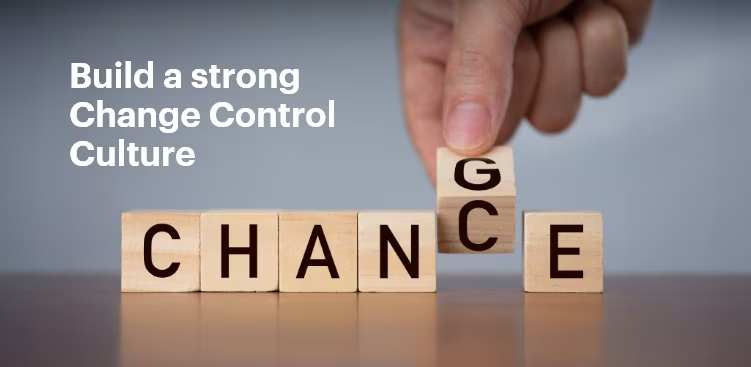
Build a strong Change Control Culture

Project Delivery

We cannot emphasise enough the significance of a robust Change Control process. You should NEVER have a contract without a Change Process clause!

When someone requests a change, the team triggers a series of approvals, giving the requested changes the attention and focus needed to decide if they are necessary.

Well, it will curb scope creep is one aspect but the important thing is it leads to a good review of the original plan and assessment of

  • What will the impact
  • Are we ready to accept the impact – delays, costs, etc.
  • Is there enough cost and time bandwidth
  • Lastly, will it enhance or significantly support the fundamental goal of the project

Change Control culture allows you to maintain the required transparency & puts you in control! Additionally it demonstrates your forward thinking and professionalism thereby a positive impact on your company’s reputation. Win-Win! Isn’t it?

Penalties – The Silver Bullet

Clients and service providers deploy penalties as an aggressive approach to ensure both sides hold their end of the bargain.

With penalties baked into a contract ensures both parties are always diligent and never lose sight of the goal. Penalties trigger a competition, fierce at times where both strive to achieve the same goal.

And it goes without saying, all unwanted and impulsive requests are out of the door right away.

Why so?

Because the primary reason for undertaking a project is to make money not lose it!

Avoid penalties because they signal distrust, hurt morale, stifle innovation, and can cause conflicts.

Therefore, professionals do not consider them appropriate.

To that effect, let us deploy the right tools as illustrated above and at our disposal to ensure that things never come this far in our projects!

Introduction in project management Trends

Welcome to the World of Project Management Trends

In the fast-paced world of project management, staying up-to-date with the latest trends and innovations is not just a choice; it’s a necessity. This chapter serves as your gateway to the exciting landscape of project management trends in 2023 and beyond.

Project Management Trends

Why Trends Matter

The world of project management is constantly evolving, influenced by changes in technology, the workforce, and global dynamics. As we step into 2023, it’s crucial to understand the emerging trends that are shaping the way projects are planned, executed, and delivered. These trends have the potential to revolutionize the field, offering new opportunities for efficiency, collaboration, and success.

Exploring the Unknown

This chapter will introduce you to the concept of project management trends and their significance. You’ll gain an understanding of how trends emerge, why they matter, and how they can impact your projects, teams, and career. We’ll explore how embracing these trends can lead to better project outcomes, enhanced competitiveness, and improved project management practices.

The Importance of Staying Informed in Project Management

Adapt or Stagnate

The project management landscape is not immune to change. Technology advances, new methodologies, and shifting business environments continually influence how projects are managed. Those who adapt and embrace change thrive, while those who resist it risk falling behind.

Enhancing Decision-Making

Staying informed about trends empowers project managers to make informed decisions. It provides valuable insights into emerging best practices, tools, and strategies that can lead to more successful project outcomes. It also helps in identifying potential risks and challenges before they become obstacles.

Competitive Edge

In an increasingly competitive job market, being well-versed in the latest trends and industry knowledge can set you apart. It demonstrates your commitment to professional growth and positions you as a valuable asset to your organization.

Continuous Learning

The world of project management is a journey of lifelong learning. This chapter emphasizes the importance of continuous education, networking, and professional development as essential components of staying informed.

Agile Project Management Evolution

project management trends

The Ongoing Dominance of Agile

Agile project management methodologies have transcended their origins in software development to become a driving force across industries. As we venture into 2023, the dominance of Agile remains undiminished, and for good reason.

Agile project management is characterized by its adaptability, collaboration, and customer-centric approach. Teams that embrace Agile principles value customer feedback, iterate quickly, and remain flexible in the face of change. This approach allows organizations to deliver value to their customers faster and more efficiently.

Agile Beyond Software Development

While Agile’s roots are firmly planted in software development, its influence now extends far beyond this realm. In 2023, expect to see Agile principles applied in diverse sectors such as marketing, healthcare, manufacturing, and even government.

Marketing teams, for instance, use Agile to respond swiftly to market changes, optimize campaigns, and improve customer engagement. Healthcare organizations adopt Agile to enhance patient care through iterative process improvements. Manufacturers use Agile to streamline production and reduce waste. The public sector employs Agile to deliver citizen-centric services with greater efficiency.

Combining Agile with Other Methodologies

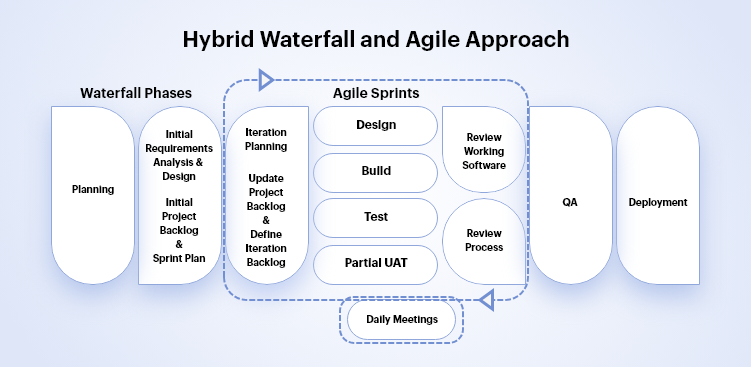
In 2023, project managers are increasingly recognizing the benefits of hybrid methodologies. By blending Agile with traditional project management approaches like Waterfall, organizations can leverage the strengths of each to suit their unique project requirements.

This hybrid approach, often referred to as “Water-Scrum-Fall” or simply “Hybrid Agile,” allows teams to maintain a structured project framework while incorporating Agile principles for flexibility and responsiveness. The result is a project management strategy that combines the best of both worlds, ensuring project success even in complex environments.

Remote and Hybrid Workforce Management

project management trends

1.  Remote Work’s Permanent Impact

In the wake of the global pandemic, remote work has transitioned from a temporary necessity to a long-term, sustainable working model. The impact of this shift is profound and will continue to shape project management trends in 2023 and beyond.

  • Remote Work’s Prolonged Influence

Remote work has proven its viability and effectiveness. Businesses have witnessed increased productivity, cost savings, and access to a broader talent pool. As a result, remote work is here to stay, influencing how projects are managed and executed.

  • Flexibility and Work-Life Balance

Remote work offers team members greater flexibility in managing their work schedules, contributing to improved work-life balance. Project managers must adapt to accommodate these flexible arrangements while maintaining productivity and accountability.

  • Global Collaboration Opportunities

One of the key benefits of remote work is the ability to collaborate with team members and experts from around the world. This global reach can enhance project teams’ diversity and expertise, leading to innovative solutions.

2. Adapting Project Management for Remote Teams

Effectively managing remote project teams requires a shift in mindset and the adoption of new strategies. In 2023, project managers will need to adapt and optimize their approaches for remote work environments.

  • Communication and Collaboration Tools

Remote project teams heavily rely on digital tools for communication and collaboration. Project managers should invest in robust tools that enable real-time communication, file sharing, and video conferencing to keep teams connected.

  • Clear Project Documentation

In remote settings, project documentation becomes paramount. Project managers should ensure that project goals, timelines, and tasks are well-documented and easily accessible to team members. This fosters transparency and accountability.

  • Remote-Friendly Processes

Project management processes and methodologies may need adjustment for remote teams. Agile and Kanban methodologies, for example, offer flexibility and adaptability, making them ideal for remote project management.

3. The Rise of Hybrid Work Models

As organizations embrace the benefits of both remote and in-office work, hybrid work models are on the rise. This shift presents unique challenges and opportunities for project managers.

  • Hybrid Work Dynamics

Hybrid work models combine remote and in-office work, allowing employees to choose where they work. Project managers must navigate the intricacies of managing teams with varying work locations.

  • Workspace Flexibility

The rise of hybrid work means that project managers should consider workspace flexibility when planning projects. Some team members may require office space for certain tasks, while others prefer remote work.

  • Effective Team Synchronization

Maintaining a sense of team cohesion in a hybrid environment is crucial. Project managers will need to devise strategies for effective team synchronization, ensuring that remote and in-office team members collaborate seamlessly.

4. Tools and Strategies for Remote Team Success

To successfully manage remote teams in 2023, project managers must leverage a range of tools and implement strategies that foster collaboration, productivity, and team cohesion.

  • Digital Project Management Platforms

Investing in digital project management platforms is essential. These tools offer centralized project tracking, task management, and collaboration features that are vital for remote team success.

  • Virtual Team Building

Virtual team-building activities can help strengthen bonds among remote team members. Project managers should schedule regular virtual meetings, team-building exercises, and social events to build rapport.

  • Performance Monitoring and Feedback

Monitoring team performance remotely requires clear performance metrics and regular feedback sessions. Project managers should establish key performance indicators (KPIs) and conduct one-on-one performance reviews with team members.

AI and Automation in Project Management

project management trends

1. The Role of Artificial Intelligence (AI)

In the rapidly evolving landscape of project management, the incorporation of artificial intelligence (AI) has emerged as a pivotal trend that promises to revolutionize how projects are planned, executed, and managed.

AI, with its remarkable ability to mimic human intelligence, has found its way into the core of project management processes, offering a spectrum of benefits that were once considered futuristic.

2. Automating Repetitive Tasks

One of the most immediate and tangible advantages of AI in project management is its capacity to automate repetitive and time-consuming tasks.

Project managers often find themselves burdened with administrative chores, such as data entry, file organization, and routine communication.

AI-powered tools and software can shoulder these responsibilities, freeing up valuable time for project managers to focus on strategic decision-making and complex problem-solving.

AI-driven automation doesn’t merely reduce manual labor; it enhances accuracy and efficiency.

Whether it’s auto-generating reports, scheduling meetings, or sending status updates, AI ensures that these tasks are executed flawlessly and promptly, minimizing the risk of human error

3. AI-Driven Predictive Analytics

Predictive analytics has long been a hallmark of successful project management, enabling teams to anticipate potential roadblocks, allocate resources effectively, and optimize project timelines.

With the integration of AI, predictive analytics reaches unprecedented heights of precision and sophistication.

AI algorithms can analyze vast datasets, historical project performance, and external factors with lightning speed, offering project managers insights that were once unattainable.

By predicting project risks, resource needs, and potential delays, AI empowers project managers to take proactive measures and make data-driven decisions that drive project success.

4. Chatbots and Virtual Assistants

Chatbots and virtual assistants are becoming integral members of project management teams. These AI-powered entities are available 24/7 to assist project managers, team members, and stakeholders.

They offer real-time responses to inquiries, facilitate communication, and streamline information retrieval.

For instance, a project management chatbot can answer questions about project status, generate progress reports, and even assign tasks based on natural language commands.

Virtual assistants can schedule meetings, set reminders, and provide updates on project milestones. The result is a more responsive and efficient project management environment that keeps everyone on the same page, regardless of time zones or work schedules

As we look to the future of project management in 2023, it is evident that AI is not just a tool but a transformational force. Its ability to automate tasks, provide predictive insights, and enhance communication through chatbots and virtual assistants positions AI at the top.

Every project manager and organization should embrace to remain competitive and efficient in an increasingly dynamic business landscape.

Sustainability and Green Project Management

1. The Growing Emphasis on Sustainability

As we step into 2023, one of the most prominent trends in project management is the growing emphasis on sustainability. It’s no longer just a buzzword; sustainability has become a central concern for businesses, organizations, and project managers worldwide.

  • Sustainability in a Changing World

The world is facing environmental challenges like never before – climate change, resource depletion, and environmental degradation are all too real. As a response, organizations are increasingly integrating sustainability principles into their projects. This shift is driven by a sense of responsibility, regulatory pressures, and the realization that sustainable practices often lead to cost savings and competitive advantages.

2. Integrating Sustainability into Projects

The integration of sustainability into projects involves aligning project objectives and practices with eco-friendly principles.

  • Defining Sustainable Project Management

Sustainable project management goes beyond simply adopting green technologies or reducing waste. It involves an all-encompassing approach where environmental, social, and economic aspects are considered. Learn how to set sustainability goals and objectives that align with your project’s purpose.

  • The Triple Bottom Line

Sustainable projects are evaluated using the triple bottom line concept – People, Planet, and Profit. We explore how to balance these elements effectively, ensuring that your project benefits society, minimizes environmental impact, and remains financially viable.

3. Measuring Environmental Impact

Effective sustainability management requires the ability to measure and quantify your project’s environmental impact.

  • Environmental Impact Assessment (EIA)

EIA is a crucial step in understanding your project’s environmental implications. We discuss how to conduct a comprehensive EIA, identifying potential risks and opportunities for improvement.

  • Carbon Footprinting and Life Cycle Analysis

Learn about carbon footprinting and life cycle analysis, which help you measure the carbon emissions associated with your project and assess its overall environmental impact. These methods are vital for making informed decisions to reduce your project’s footprint.

4. Sustainable Supply Chain Management

In the globalized business landscape of 2023, supply chains play a pivotal role in sustainability efforts.

  • Green Procurement and Vendor Selection

Selecting environmentally responsible suppliers and products is key to sustainable supply chain management. We provide insights into green procurement strategies and criteria for vendor selection.

  • Reducing Waste and Optimizing Resources

Efficient resource management and waste reduction are central to sustainability. Discover techniques to minimize resource consumption and waste generation in your projects.

  • Transportation and Logistics

Managing the transportation of materials and products is another critical aspect of sustainability. Learn about eco-friendly transportation and logistics practices to reduce emissions and environmental impact.

Cybersecurity in Project Management

1. The Escalating Threat Landscape

In the ever-connected digital landscape of the 21st century, the escalation of cybersecurity threats has become a cause for significant concern across industries.

  • The Changing Face of Cyber Threats

The year 2023 promises to bring new challenges in the form of sophisticated cyber threats. From ransomware attacks to data breaches, project managers must be vigilant and proactive in safeguarding their project assets, data, and sensitive information. Understanding the nature of these threats is the first step in defending against them.

  • The Cost of Cybersecurity Incidents

Cybersecurity incidents come at a steep cost, both financially and in terms of reputation. In 2023, organizations will need to allocate more resources to protect their projects and stakeholders from the potentially devastating consequences of a breach.

2. Cybersecurity Best Practices for Projects

Project managers must become adept at integrating cybersecurity best practices into their project management methodologies.

  • Security by Design

One of the primary cybersecurity best practices involves implementing security measures from the very beginning of a project’s life cycle. Project managers should work closely with cybersecurity experts to embed security into project designs, ensuring that potential vulnerabilities are identified and mitigated before they become major issues.

  • Regular Training and Awareness

Human error is a significant contributor to cybersecurity incidents. Hence, continuous training and raising awareness among project teams is essential.

  • Robust Access Controls

Limiting access to sensitive project data is another vital aspect of cybersecurity. Project managers should implement robust access controls to ensure that only authorized personnel have access to critical information.

3. Data Protection and Privacy Concerns

Data protection and privacy have moved to the forefront of global conversations. As 2023 unfolds, organizations and project managers will be under increasing scrutiny to ensure the privacy and security of their project data.

  • Compliance and Regulations

A myriad of data protection regulations, such as GDPR and CCPA, have emerged globally.

  • Data Encryption and Storage

Effective data encryption and secure storage methods are essential components of data protection.

Cybersecurity as Part of Risk Management

Cybersecurity is no longer an isolated concern but an integral part of risk management in project management.

Cyber Risk Assessment

Assessing cyber risks should be a standard practice during project risk assessments.

Response and Recovery Plans

No cybersecurity strategy is complete without comprehensive response and recovery plans.

Data-Driven Decision Making

1. Harnessing Data for Project Insights

In the digital age, data is not just a buzzword; it’s a valuable asset that project managers can leverage to gain deeper insights into their projects. Harnessing data for project insights has become a pivotal trend in the realm of project management.

  • The Data Revolution in Project Management

In recent years, the collection and analysis of project data have become more accessible and sophisticated. Project managers now have the tools and technologies to gather vast amounts of data related to project progress, resource allocation, budgeting, and more.

  • Real-Time Visibility

One of the significant advantages of data-driven project management is real-time visibility into project performance. With the right tools, project managers can monitor key metrics and KPIs as they change, allowing for proactive decision-making and issue resolution.

  • Predictive Analytics

Predictive analytics has gained prominence in project management. By analyzing historical project data, machine learning algorithms can forecast potential risks, delays, and resource bottlenecks. This enables project managers to take preventative actions and optimize project outcomes.

  • Resource Allocation and Optimization

Data-driven insights also play a crucial role in resource allocation. Project managers can identify underutilized resources, allocate them more efficiently, and ensure that the right resources are assigned to the right tasks at the right time.

2. The Power of Project Analytics

Project analytics goes beyond mere data collection; it involves the systematic analysis of project data to extract actionable insights.

  • Project Analytics in Action

Project analytics encompasses a range of activities, including data collection, data cleansing, data analysis, and data visualization. It allows project managers to make data-driven decisions at every stage of a project’s lifecycle.

  • Performance Metrics and Key Performance Indicators (KPIs)

Effective project analytics involves defining and tracking relevant performance metrics and KPIs. These metrics can vary depending on the project’s objectives but often include factors like project duration, cost efficiency, and client satisfaction.

  • Data Visualization Tools

The power of project analytics is amplified through data visualization tools. These tools transform complex project data into easily digestible charts, graphs, and dashboards, enabling stakeholders to quickly grasp project status and trends.

  • Continuous Improvement

Project analytics fosters a culture of continuous improvement. By regularly analyzing project data, teams can identify areas where processes can be optimized, leading to greater efficiency and project success.

3. Business Intelligence Tools

Business intelligence (BI) tools have become indispensable for project managers seeking to unlock the full potential of their data.

  • Understanding Business Intelligence

These tools are designed to collect, process, and analyze data to support decision-making. They provide a holistic view of project performance by consolidating data from various sources.

  • Customized Dashboards

BI tools offer the advantage of customizable dashboards. Project managers can tailor these dashboards to display the specific metrics and insights most relevant to their projects and organizational goals.

  • Data Integration

Integration capabilities are a hallmark of BI tools. They can seamlessly connect with other software systems, including project management software, CRM tools, and financial systems, creating a unified data environment.

  • Self-Service Analytics

BI tools empower non-technical users to explore data and generate reports without relying on IT teams. This democratization of data access enhances collaboration and decision-making across the organization.

4. Data Ethics and Governance

As data takes center stage in project management, ethical considerations and governance become paramount.

  • Data Privacy and Security

Ensuring data privacy and security is a fundamental ethical responsibility. Project managers must implement robust data protection measures to safeguard sensitive information and comply with data privacy regulations.

  • Transparency and Accountability

Ethical data management practices require transparency in data collection, processing, and sharing. Project managers should establish clear accountability for data-related decisions and actions.

  • Data Quality and Integrity

Maintaining data quality and integrity is essential. Ethical data practices involve accurate data collection, validation, and maintenance to ensure the reliability of insights generated.

  • Stakeholder Consent and Informed Consent

Respecting stakeholder consent and ensuring that individuals provide informed consent for data collection and use are ethical imperatives. Project managers should communicate clearly about data practices and seek consent when necessary.